Tirzepatide and Appetite: Fullness, Food Choices and Bali
Explore how tirzepatide affects appetite and fullness, what human research measured and how to compare the 30 mg and 60 mg pens offered in Bali.
Tirzepatide's appeal in weight-management research starts with a question many people recognise: what changes when hunger and fullness become easier to work with? The compound acts at GIP and GLP-1 receptors, and human studies have measured appetite, food intake and body composition alongside weight. Tirzepatide and appetite is therefore a more useful conversation than a simple promise that you will eat less.
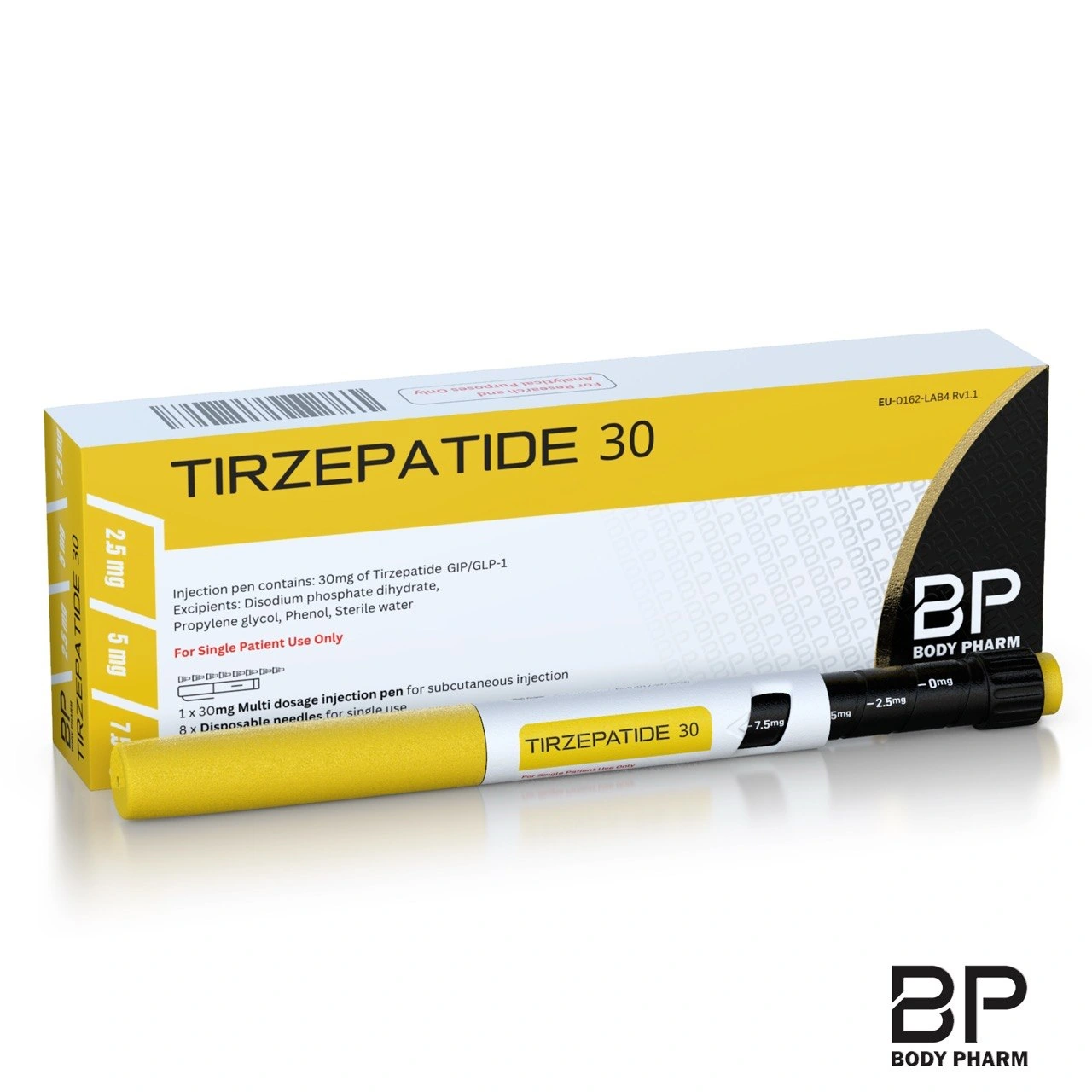
For readers comparing tirzepatide in Bali, Indonesia, the practical product choice also matters. Our catalogue offers 30 mg and 60 mg pre-filled pens, giving you two clearly labelled presentations to review. The research explains the biological interest; the listing explains the actual format available for your enquiry.
Hunger, fullness and food intake are separate measurements
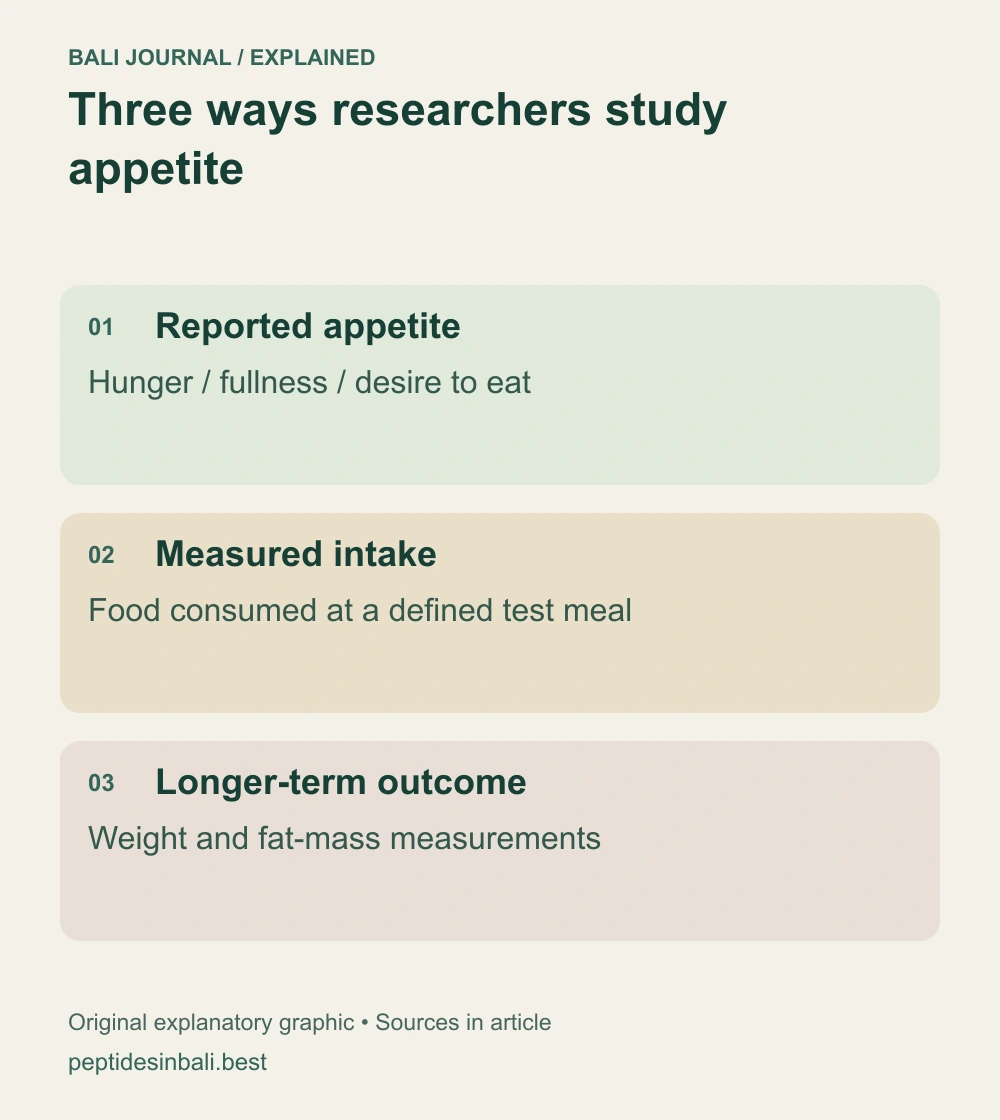
Hunger describes a desire to eat. Fullness describes how satisfied you feel, often after food. Actual energy intake records what someone consumes. These measures can move together, but a well-designed study does not assume they are identical.
That distinction matters because an everyday report such as “I am less hungry” is only one part of a weight-management experience. Researchers may ask participants to rate appetite, observe what they eat at a test meal and measure changes in fat mass over time. Each adds a different piece of information.
Understanding the difference makes an online article more useful. You can recognise whether a headline concerns a questionnaire score, a laboratory meal or a longer-term change in body composition, instead of treating all three as interchangeable results.
What the human appetite study found
A randomised study analysis in people with type 2 diabetes examined tirzepatide, semaglutide and placebo over 28 weeks. The study reported appetite reduction with tirzepatide compared with placebo and greater reductions in body weight and fat mass. Appetite scores and the reduction in measured lunch intake did not significantly differ between tirzepatide and semaglutide in that study.
The interesting point is that one measured meal did not fully explain the different weight outcomes. Appetite regulation is part of a wider biological picture, and a test meal is a window into that picture rather than a complete record of life outside the laboratory.
For a reader, this supports a more thoughtful expectation: the compound's research profile includes measurable changes in appetite and body composition, while your own questions about suitability and a particular supplied product remain individual.
Why the dual-receptor design attracts attention
Tirzepatide is discussed as a dual GIP/GLP-1 receptor agonist. The two receptor systems connect with nutrient-responsive signalling, which is why appetite and glucose regulation both appear in its research programme.
This is an ingredient-level explanation. A receptor target does not tell you the amount in a pen, the device instructions or how a specific product should be used. It helps you understand why the compound is being studied and what kinds of outcomes are worth measuring.
The distinction is useful when comparing products online. Start with the named molecule, then inspect its presentation. Two listings can mention the same biological pathway while offering very different pack contents.
A Bali context for the appetite conversation
Visitors often eat in a different rhythm from home: breakfast at the villa, lunch after training, a long cafe afternoon or dinner after a trip across the island. That makes the language of appetite especially familiar, but the location does not turn a study into a travel-specific prediction.
Use the research to define better questions. Are you asking about hunger between meals, fullness after eating, changes in food interest or longer-term weight management? A precise question is easier to discuss than an undefined request for the “strongest” pen.
Keep your existing medical plan and the exact product information together when discussing any change. An online explanation can help you understand the terms and compare formats; a treatment decision belongs to the clinician who knows your situation.
Comparing the 30 mg and 60 mg pen formats
| Catalogue detail | Why it helps your comparison |
|---|---|
| Compound name | Identifies tirzepatide rather than another peptide |
| 30 mg or 60 mg total contents | Describes the complete labelled pen, not an individual dose |
| Pre-filled presentation | Defines the supplied format before ordering |
| IDR price and confirmed order details | Keeps the comparison tied to the Bali offer |
The larger total amount is a format difference. Its meaning for an individual order depends on the supplied product information and the plan already agreed with your clinician. It is not a reason to infer a schedule from a catalogue image.
Our tirzepatide product page lets you review the available presentations before contacting the team. Check which variant you are enquiring about so the conversation starts with a precise product reference.
Make the local order enquiry specific
If you are staying in Canggu, Seminyak or Uluwatu, include the pen presentation, quantity, accommodation name and a map pin where useful. Tell the team when someone can receive the order. Availability and delivery arrangements can then be confirmed for that actual location.
For an informed comparison, keep the research benefit and the product offer connected without merging them. The research gives tirzepatide a clear scientific rationale in appetite and weight management. The catalogue gives you a defined presentation to inspect, a price to compare and a straightforward next step for a Bali enquiry.