Tesamorelin for Visceral Fat: The CT Evidence, Bali Guide
Understand tesamorelin’s visceral-fat research, why CT measurements matter and the 32 mg prefilled pen listed for Bali enquiries.
The most compelling reason to read about tesamorelin and visceral fat is its unusually specific research target. Instead of treating every change around the waist as the same outcome, researchers measured fat inside the abdomen with computed tomography. That gives the tesamorelin story a clearer focus: a defined tissue compartment, an objective measurement and results in identifiable patient groups.
For readers in Bali, Indonesia comparing body-composition compounds, this focus is valuable. A lower number on the bathroom scale, a smaller waist and a reduction in visceral adipose tissue answer different questions. Understanding those differences helps you compare tesamorelin with appetite-focused compounds on sensible terms.
What visceral fat means
Visceral adipose tissue, usually shortened to VAT, sits within the abdomen around internal organs. Subcutaneous fat lies beneath the skin. Both contribute to the body's fat stores, but they occupy different locations and are measured differently in research.
A waist measurement is useful for following a trend, yet it does not isolate either compartment. A photograph is even less specific: posture, lighting and the position of the camera can change its appearance. In the studies discussed here, CT supplied a more direct abdominal-fat measurement.
That is why a strong tesamorelin article should tell you which endpoint changed. “Less visceral fat” has a particular meaning when it refers to imaging; it is not simply a more impressive way of saying that someone looked leaner.
The 26-week trial result
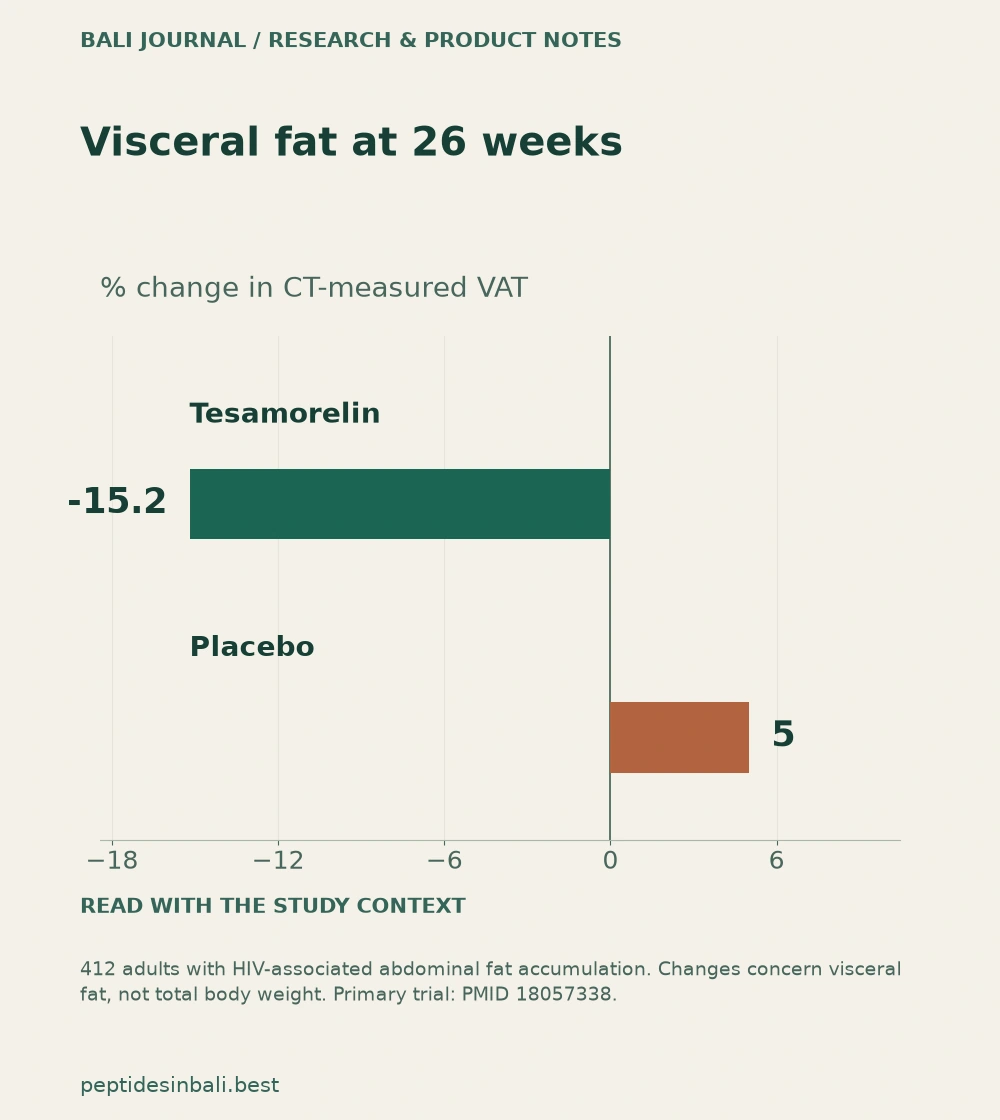
A randomised trial involving 412 adults with HIV-associated abdominal fat accumulation reported a 15.2% reduction in visceral fat with tesamorelin, compared with a 5.0% increase with placebo, at 26 weeks. This was a defined clinical population receiving the study preparation under its protocol.
The useful feature is the alignment between the research question and the measurement. The trial examined abdominal fat accumulation and assessed an internal fat compartment, rather than relying on a subjective impression of shape.
Its population also matters. These findings describe adults with HIV-associated fat accumulation; they are not a prediction that every visitor to Bali will achieve the same change. Keeping that sentence beside the result preserves its real strength: a quantified clinical finding in the group actually studied.
How the growth-hormone pathway fits
Tesamorelin is an analogue of growth-hormone-releasing hormone. The research approach stimulates the body's growth-hormone axis, with downstream changes that include IGF-I. This differs from the GIP/GLP-1 receptor approach associated with tirzepatide and from retatrutide's triple-receptor design.
The distinction gives you a useful comparison framework. Ask which biological pathway is targeted, which tissue or clinical outcome was measured and who participated. A compound selected for its visceral-fat research should be discussed through that evidence rather than an unrelated appetite score.
It also explains why “the strongest fat-loss peptide” is an incomplete shopping question. The most informative answer starts with the intended research question, then checks the exact product presentation and the person's clinical circumstances.
Read a visceral-fat chart correctly
The graphic accompanying this article displays the 26-week VAT changes from the trial. The axis describes percentage change in the measured visceral-fat compartment. It does not describe percentage body-weight loss or a change in body-fat percentage.
For example, a result of minus 15.2% in VAT cannot be converted into a promise to lose 15.2% of total body weight. The underlying quantities are different. Recognising this makes it much easier to read studies across tesamorelin, tirzepatide and other compounds without creating a false ranking.
When discussing an existing assessment, bring the measurement type and date. An imaging result, waist trend and weight record can each be useful, provided their roles remain clear. A clinician can decide which assessment is appropriate; an online chart cannot diagnose the type of fat someone carries.
Tesamorelin 32 mg in the Bali catalogue
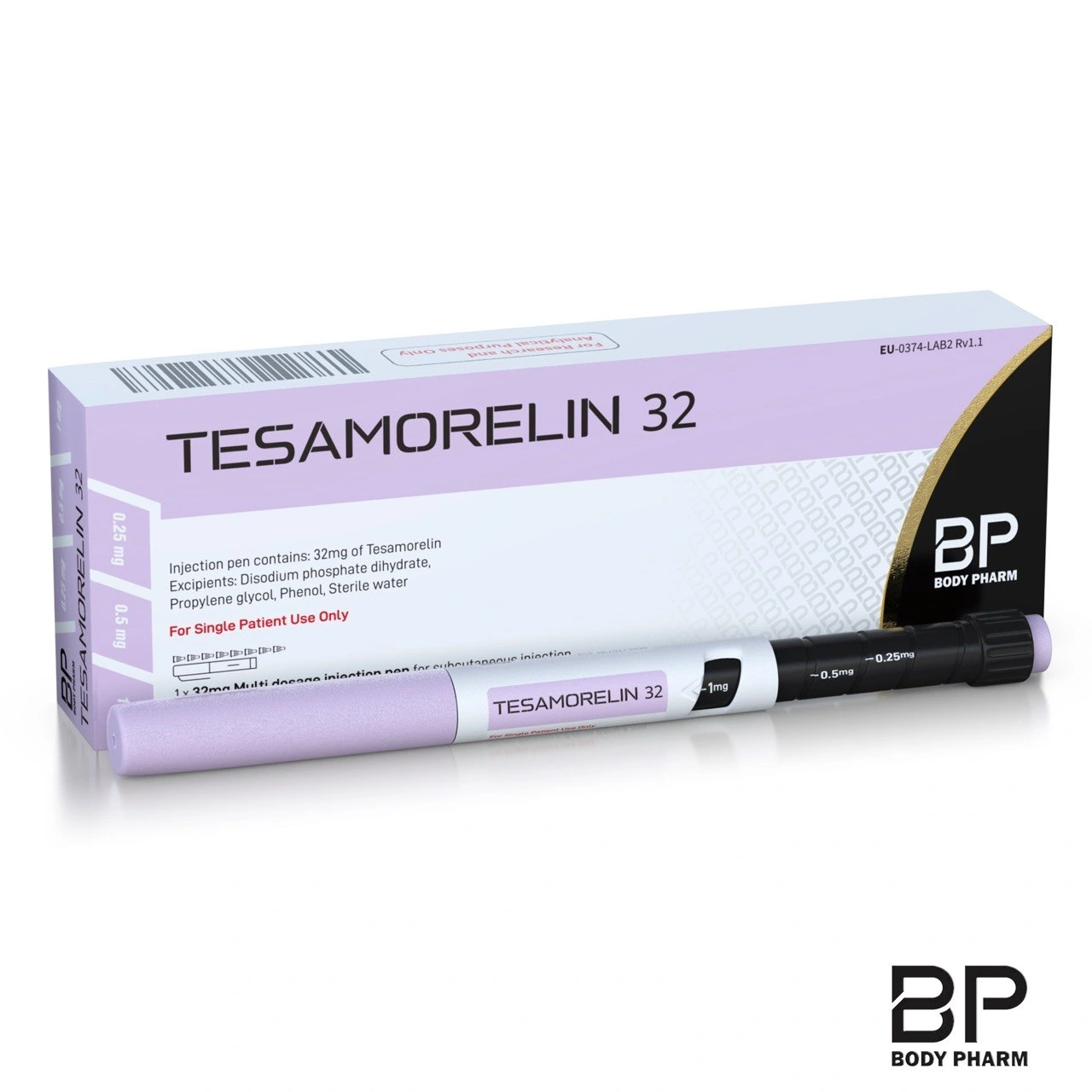
Our tesamorelin pen listing provides a concrete starting point for a product enquiry: 32 mg total labelled contents in a prefilled pen, listed at IDR 2,900,000. The amount describes the complete pen, rather than an individual administration.
| Detail to compare | What the listing tells you |
|---|---|
| Named compound | Tesamorelin |
| Presentation | Prefilled pen |
| Total contents | 32 mg per pen |
| Listed item price | IDR 2,900,000 |
| Receiving location | Bali address, confirmed for the enquiry |
The format makes comparison straightforward: you can identify the compound, pack contents and item price before contacting the team. Review the supplied product information and any batch-specific documentation rather than treating the trial as testing of this finished pen.
Make a clear Bali enquiry
Whether you are staying in Canggu, Seminyak, Ubud or Uluwatu, include the selected product, quantity, accommodation name and receiving address. A map pin is helpful where the entrance is difficult to identify. Request confirmation of availability and the proposed receiving arrangements before relying on a delivery time.
Tesamorelin's strongest research distinction is its focus on an objectively measured internal fat compartment. Pair that understanding with the current product details, and your next conversation can be precise about both the science and the actual Bali catalogue item.