BPC-157 and Tissue Repair: Why Blood-Vessel Research Matters
Explore BPC-157’s vascular and cell-migration research, the endpoints behind recovery headlines and the 16 mg + 16 mg blend listed in Bali.
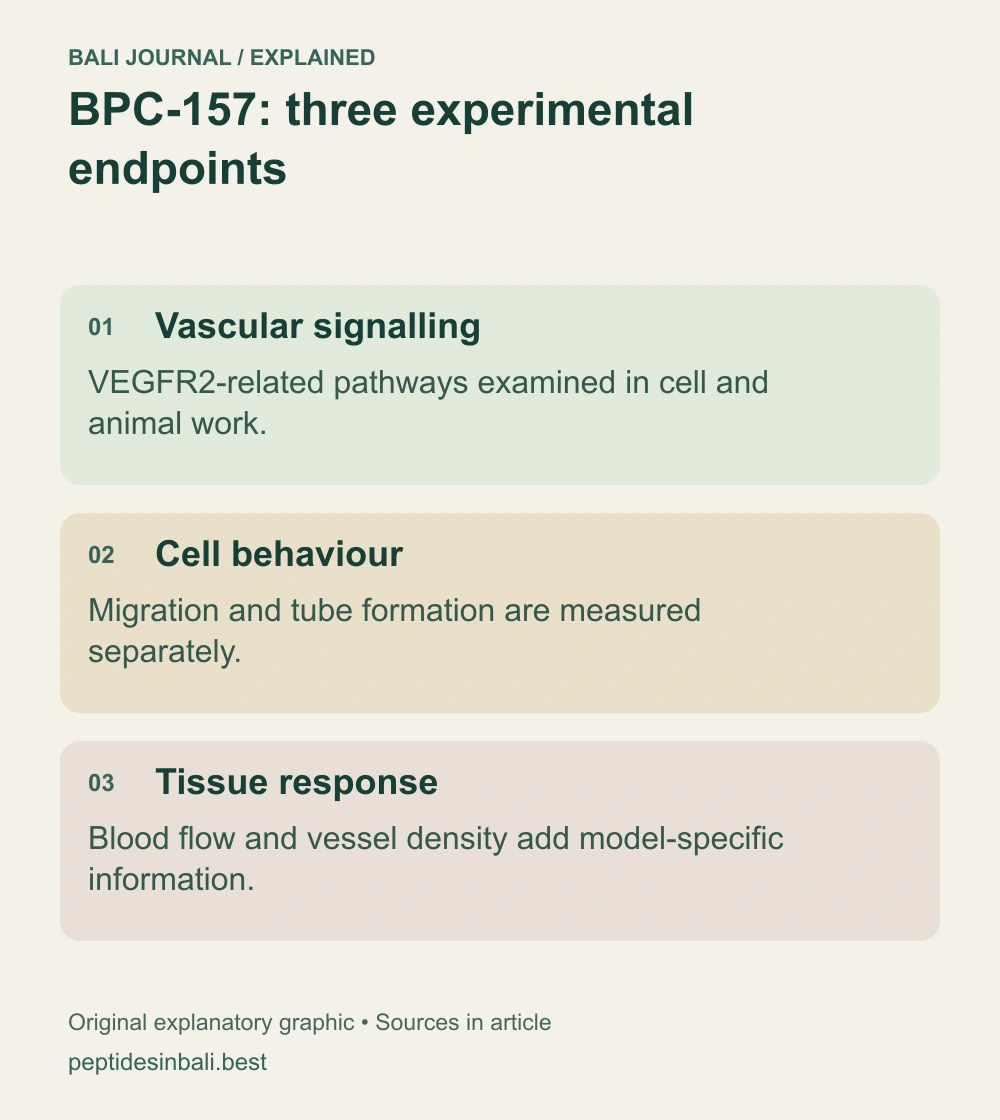
Blood supply is an important part of the environment in which tissues function. That is why BPC-157 research on vascular signalling and cell migration is more informative than a broad “recovery peptide” label. It points to specific processes researchers can investigate: endothelial-cell behaviour, vessel formation and responses within experimental injury models.
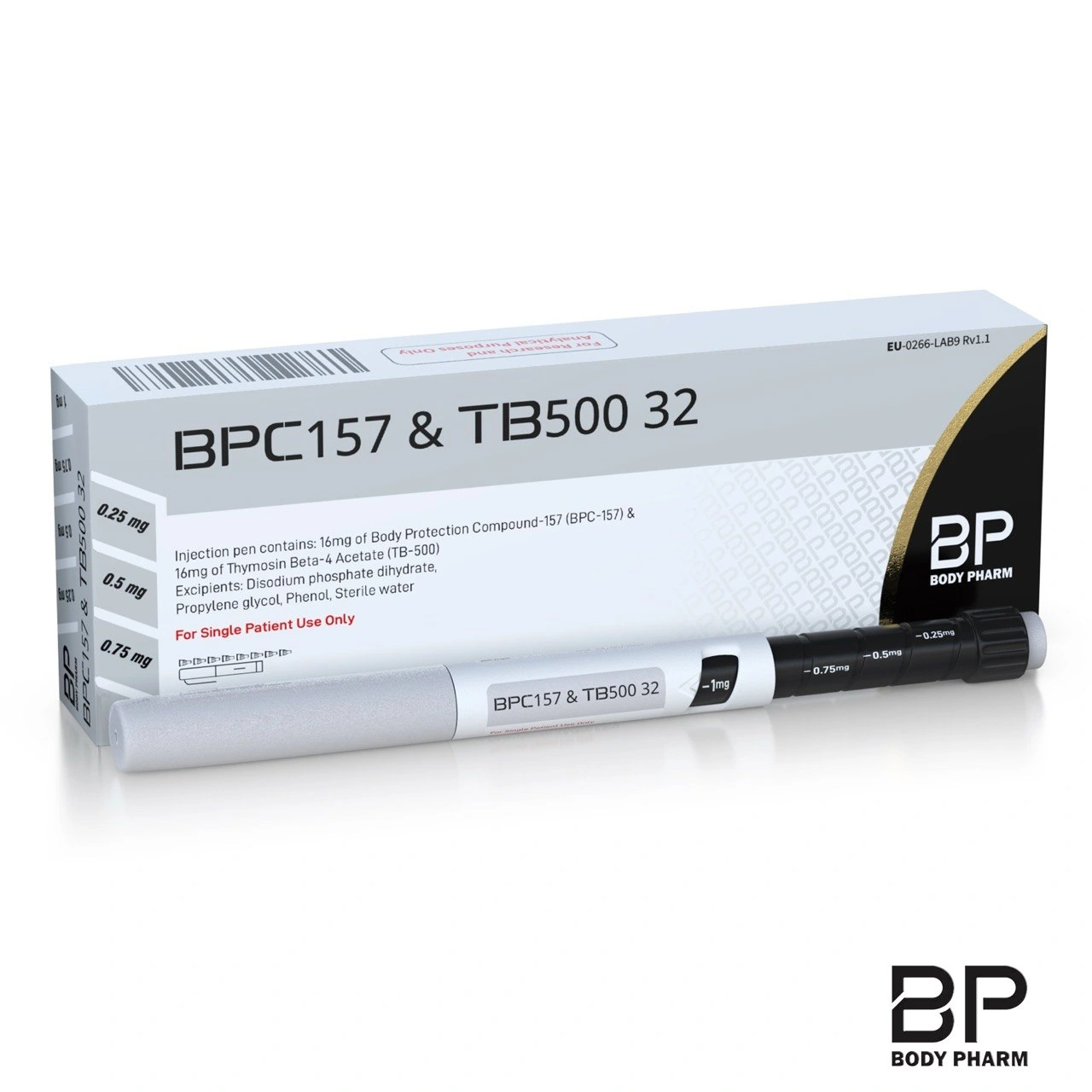
For readers in Bali, Indonesia interested in the science behind the name, those mechanisms deserve a clear explanation. For a product enquiry, the catalogue item is equally specific: one prefilled pen labelled BPC-157 16 mg plus TB-500 16 mg, listed at IDR 3,000,000.
What angiogenesis actually describes
Angiogenesis is the formation of blood vessels from existing vessels. Researchers can study aspects of it using cell assays and animal models. It is a biological process, not a synonym for faster healing in every setting.
An endothelial tube-formation assay, for example, examines how cells organise in a controlled experimental environment. An animal blood-flow measurement examines another layer of the response. Neither should be confused with the time it takes a particular person to return to surfing or resistance training.
The interest in BPC-157 becomes clearer when those endpoints retain their names. Instead of an all-purpose repair promise, the research offers questions about vascular responses and cellular behaviour.
The VEGFR2 study
A primary BPC-157 study examined endothelial cells, chick membrane assays and a rat hind-limb ischaemia model. It reported changes connected with vessel formation and blood-flow recovery, alongside VEGFR2-related signalling. The experimental pathway included Akt and eNOS.
VEGFR2 is a receptor involved in vascular signalling. Its appearance in the study gives the mechanism more detail than the phrase “improves circulation.” The investigators examined defined molecular and tissue-level observations rather than a general feeling of recovery.
These were preclinical experiments. Their strength is the measurable relationship between the compound and the endpoints in those models; they do not establish a human injury-treatment result for the finished blend in the catalogue.
Cell migration adds another research question
Separate BPC-157 work investigated wound-related outcomes in an animal model and proliferation, migration and angiogenesis in vitro. Migration concerns the movement of cells, which is a different measurement from the formation of new tissue with a particular strength or function.
That distinction matters because repair is a coordinated process. A cell moving across a laboratory surface is not a complete reconstruction of an injured tendon. The experiment can reveal a useful mechanism without answering every later clinical question.
Reading both studies together gives the topic more depth: vascular signalling and cell behaviour are related parts of a tissue-response environment, assessed through different experimental methods.
A better way to read recovery headlines
Start by identifying the model. “Human endothelial cells” means cells of human origin used in an experiment; it does not mean a clinical trial in people. “Animal wound model” describes an intervention in that model, not a human case series.
Next, identify the outcome. Vessel density, blood flow, migration and mechanical tissue strength describe different observations. If an article presents one of these as another, the claim has become less precise than the source.
Finally, match the ingredient and presentation. Evidence for BPC-157 alone should not be relabelled as a trial of BPC-157 plus TB-500. A paired product is a separate supplied presentation with two identities to check.
The 32 mg blend in the Bali catalogue
Our BPC-157 + TB-500 pen lists 16 mg of each ingredient, for 32 mg total contents. This makes the composition easier to compare with offers that only state a combined amount.
| Product detail | Catalogue information |
|---|---|
| BPC-157 | 16 mg total labelled contents |
| TB-500 | 16 mg total labelled contents |
| Combined amount | 32 mg across both ingredients |
| Presentation | One prefilled pen |
| Listed item price | IDR 3,000,000 |
The useful commercial advantage is clarity: the ingredients, split and item price are visible. Review the product photographs and supplied information, including the precise identity described for TB-500, rather than assuming a shared trade name resolves every formulation question.
Make the Bali enquiry specific
If you are comparing products from Canggu, Seminyak or Uluwatu, send the full blend name and the 16 mg + 16 mg presentation. Add the quantity and receiving address for the actual enquiry. Availability and timing are confirmed by the team.
Keep a clinical injury question separate from pack logistics. A named mechanism in a paper can support an informed conversation, while diagnosis and a return-to-activity decision depend on the person's condition and assessment.
BPC-157's vascular and cell-migration research gives the ingredient a specific scientific story. Open the blend details to compare the actual presentation, and use the named experimental endpoints to understand exactly what makes the research interesting.