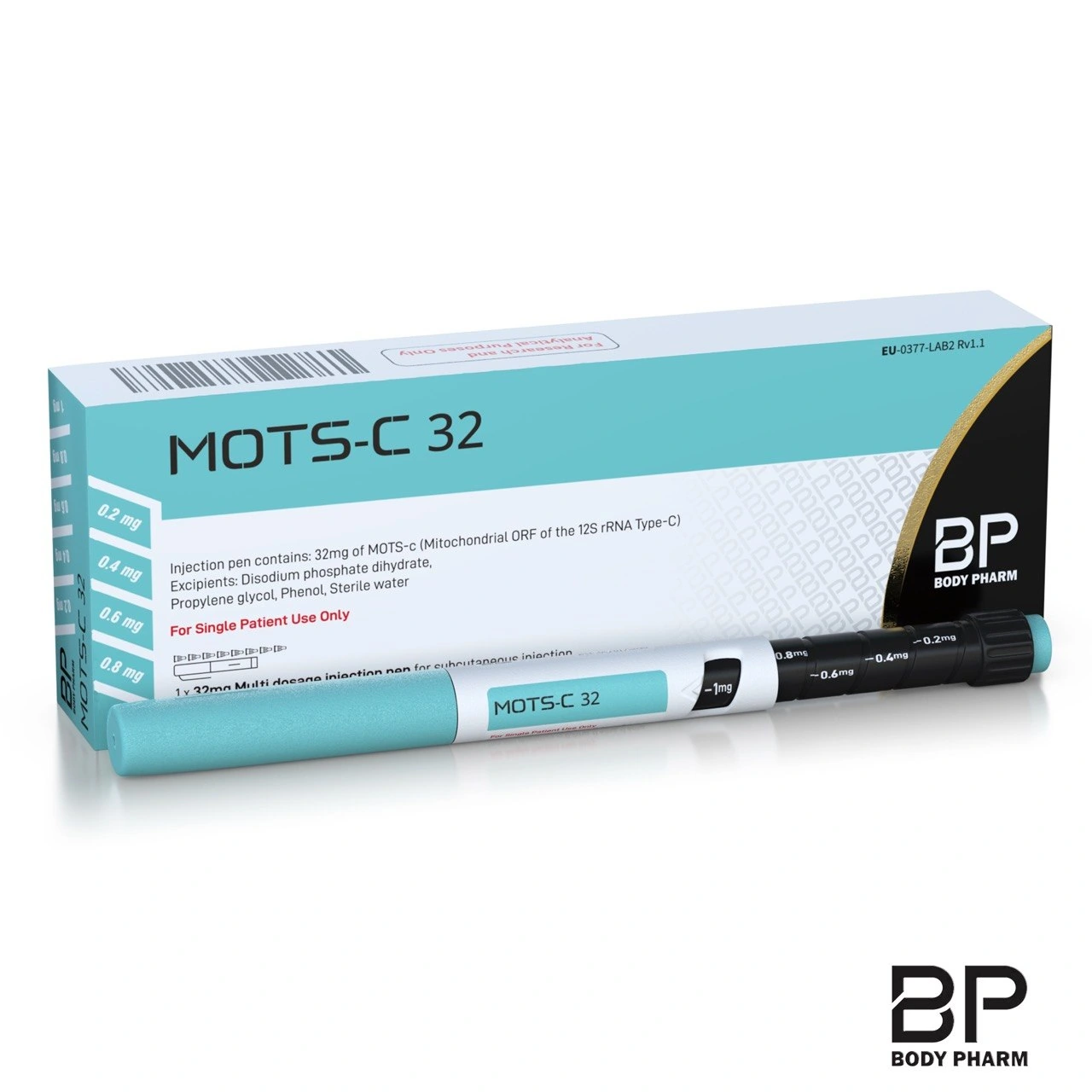
MOTS-C or urolithin A in Bali: how the two mitochondrial studies differ
Compare MOTS-C and urolithin A in Bali by molecular identity and the actual research product. Learn why mitochondrial health is a topic, not a shared ingredient.

MOTS-C is a peptide; urolithin A is a different kind of molecule commonly discussed as a postbiotic. They can appear together under “mitochondrial health”, but that shared topic does not make them versions of the same product for a Bali buyer.
What do the names identify?
The MOTS-c discovery paper describes a 16-amino-acid mitochondrial-derived signalling peptide. The urolithin A trial studied an orally supplied compound in older adults. These names describe different substances before any claims about performance or ageing enter the conversation.
A postbiotic description concerns a relationship to microbial metabolism. It does not mean that the product contains MOTS-C or that eating a food associated with its precursors reproduces a trial intervention. Keep the exact substance and preparation visible.
A shared topic is not a shared mechanism
Think of “mitochondrial health” as a shelf heading in a library. Books on that shelf may address signalling, recycling, energy conversion or a test of muscle function. Their shared location does not make their contents interchangeable.
| Comparison point | Question to ask |
|---|---|
| Identity | Which molecule is actually present? |
| Presentation | Which formulation was supplied? |
| Evidence | What was done and what was measured? |
This is useful when a broad wellness menu places a pen next to a supplement without explaining the difference. A common heading does not create a treatment comparison or a reason to combine them.
Read the experiment rather than the shelf name
The original MOTS-C paper describes a small peptide encoded within mitochondrial DNA and experiments on metabolic regulation. A separate urolithin A trial in older adults studied an orally supplied compound and measured physical and biochemical outcomes. Putting both abstracts under a heading such as “mitochondrial health” does not make the interventions equivalent.
In the human urolithin trial, a six-minute walk and a measure of muscle ATP production were primary outcomes. The between-group differences for those primary outcomes did not reach statistical significance. Some muscle-endurance measurements did improve relative to placebo. That combination of findings is more informative than describing the entire trial as either a success or a failure.
Why an oral study cannot validate a pen
A capsule and a pen differ in how an intervention reaches the body. Here, the compounds themselves also differ. To apply a result to a locally offered device, a reader would need evidence for the named intervention and formulation in the relevant population, with an outcome that matters to that reader. The presence of a mitochondrion in the headline provides none of those details.
| Study detail to retain | Reason to keep it |
|---|---|
| Name of the intervention | MOTS-C and urolithin A refer to different molecules |
| Route and population | Oral supplementation in older adults cannot describe an injected peptide in a different group |
| Which outcome was primary | A secondary endurance measure cannot replace the main walking result |
| What was compared | Improvement over time alone does not show improvement beyond placebo |
A useful question before comparing Bali listings
Suppose you are looking for something to help with your usual walk up a flight of stairs. The laboratory question “Did a muscle cell change its signalling?” and the daily question “Could a participant complete more walking?” are different. State the activity first and work back to the type of study that would actually measure it. That approach also makes negative or uncertain findings easier to recognise.
If a clinician asks what product you were considering, the local listing gives the name and format of the MOTS-C pen. A photograph of the actual carton is more precise than describing it as a mitochondrial supplement. Keep your symptom history and training goals alongside that information so the discussion can address other relevant explanations as well.
Keep a Bali enquiry specific
Use the full molecule name when requesting product information. Then ask about the offered presentation rather than a general promise of “more mitochondria” or “more energy”. Those phrases need their own definitions and supporting measurements.
The MOTS-C catalogue listing supplies the store's product context. The journal can help separate the terminology. Neither the word peptide nor the word postbiotic determines clinical suitability; understanding what the substance is makes the next conversation much clearer.
How do I check a claim that a product improves walking?
Look in the methods for a walking test, then find the comparison between the intervention and control groups on that test. An improvement within one group alone leaves open what would have happened with the comparison group. Finally check that the intervention was the compound and presentation the product claim actually names.