
A “metabolic” headline can refer to several different outcomes. If you are looking at tesamorelin products in Bali because of a lipid report, begin with the exact test result. Triglycerides, LDL cholesterol and visceral fat are different things, and a claim about one should not quietly become a claim about all three.
Copy the full test name
Keep the report row, unit and date together. Do not save only a red-highlighted number. If you later compare a test taken at home with one obtained in Bali, the full row tells a clinician what was actually measured.
Different units also make bare numbers misleading. Before deciding that a value changed, verify that the analyte and unit match. Keep both original reports rather than rewriting them into one number with the original context removed.
| Information you have | Useful next question | Shortcut to avoid |
|---|---|---|
| A triglyceride result | What does this result mean in my context? | Calling it LDL cholesterol |
| A trial headline | Which outcome and population? | Treating it as a personal forecast |
| A pen label | What product and format is listed? | Treating it as a diagnosis |
Read the tesamorelin finding precisely
The randomized tesamorelin study cited here examined a selected group with abdominal obesity and reduced growth-hormone secretion. It investigated visceral-fat and metabolic outcomes and reported a triglyceride finding. That does not establish the same outcome in every person or validate every preparation sharing the compound name.
The practical comparison is about the actual claim. If someone says a product improves “cholesterol”, ask whether the source measured LDL, HDL, total cholesterol or triglycerides. The answer may change the meaning of the headline without changing the study itself.
Product indication and study population are separate details
The EGRIFTA WR label concerns a specific tesamorelin formulation and an indication involving HIV-associated lipodystrophy. The selected research population in another paper is not a new label indication. Neither should be turned into a shopping rule for an isolated blood result.
The Tesamorelin listing identifies the pen actually offered in this catalogue. Keep that format attached to the name. A pen photograph cannot establish equivalence with every branded medicine or reproduce a trial result by itself.
FAQ: Organize the two conversations
For the clinical conversation, bring the original reports, relevant history and medication list. Ask which result needs attention and what outcome a plan would assess. For the product enquiry, ask about the exact format and available documentation. Those questions can both be specific without asking a manager to interpret your blood test.
Use the shop to compare listed products. Do not calculate a treatment course or expected lipid change from the total amount printed on a pen. Package contents and a laboratory result are different types of information.
Is triglyceride change the same as visceral-fat change?
No. One is a blood-test endpoint and the other a body-composition endpoint. A study may assess both, but that does not make one a direct measurement of the other.
Should I compare my result with a trial average?
Only as background with the population, units and endpoint visible. An average does not set an individual's expected response or treatment choice.
Can the manager tell me whether the result needs treatment?
That question needs a qualified clinician. The shop can clarify the product and the order, not supply a diagnosis from a laboratory value.
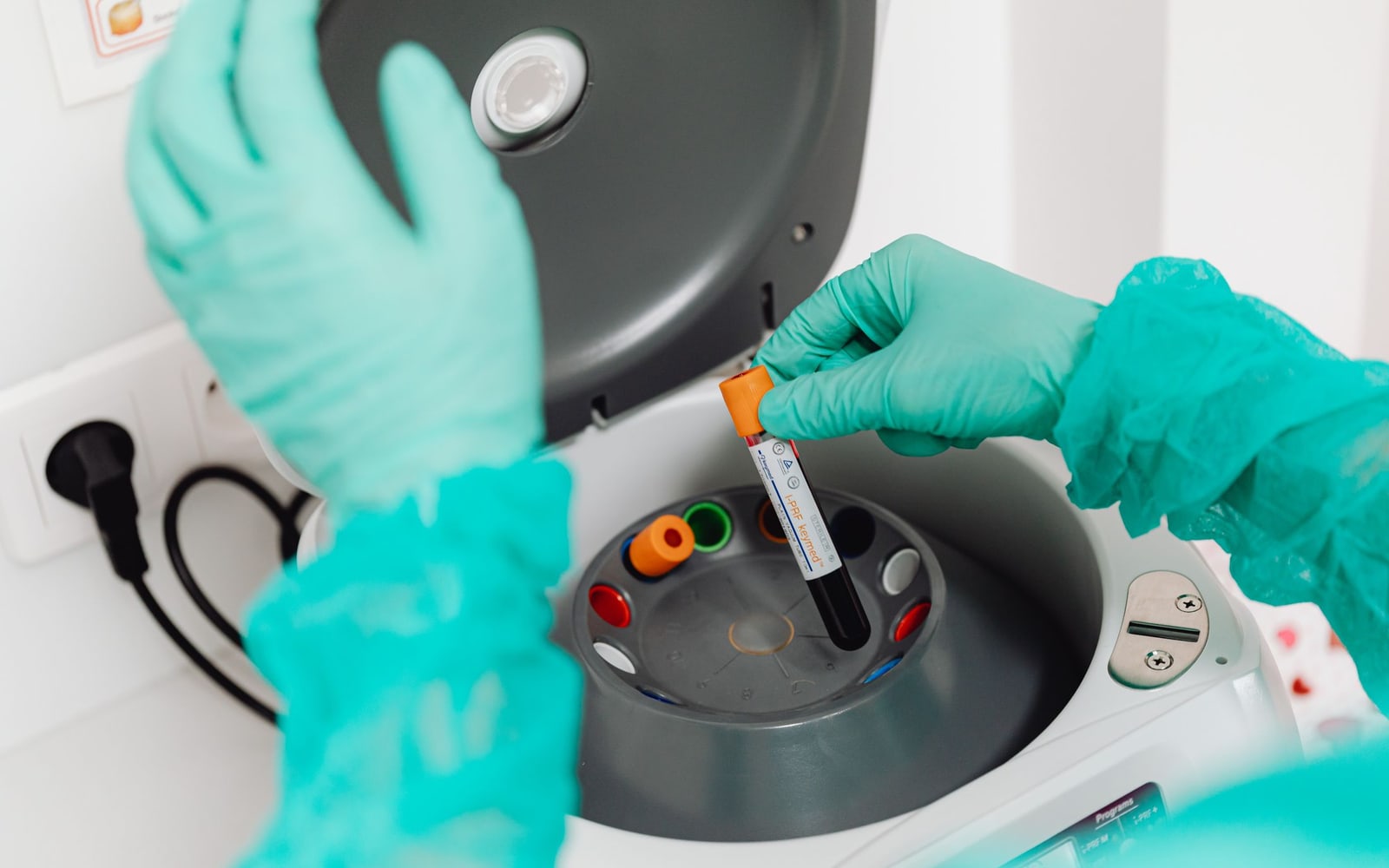
Photograph: https://kaboompics.com/ · Pexels. Blood-test laboratory materials, illustrating the discussion of separate metabolic endpoints. Illustrative stock photograph; it does not show the study preparation or its results.
Sources and further reading
- Metabolic effects of a growth hormone-releasing factor in obese subjects with reduced growth hormone secretion: a randomized controlled trial — Makimura et al., Journal of Clinical Endocrinology and Metabolism. Source checked 2026-10-25.
- EGRIFTA WR prescribing information — DailyMed. Source checked 2026-10-25.