
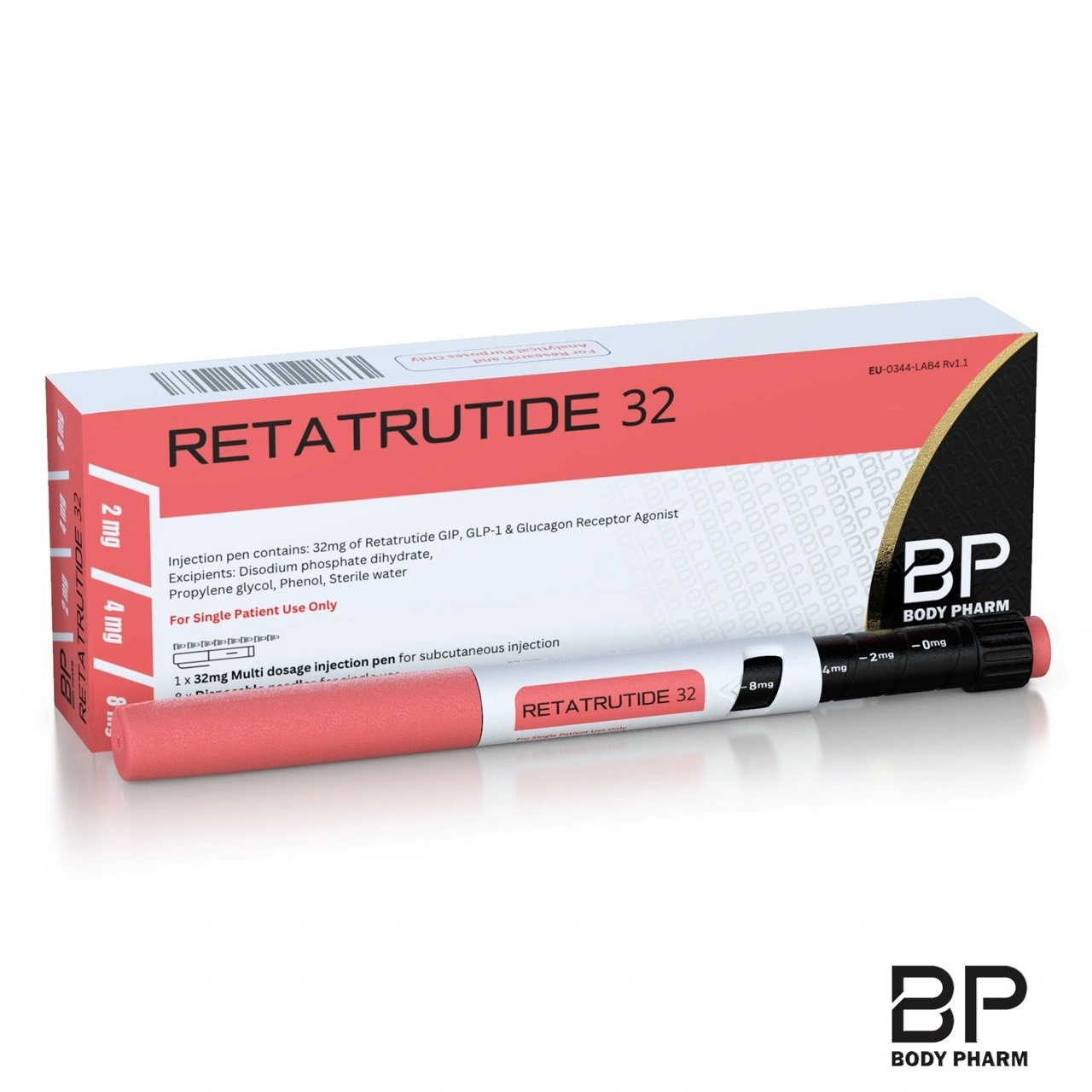
Retatrutide and Tirzepatide are different molecules with different evidence histories. Retatrutide targets GIP, GLP-1 and glucagon receptors; Tirzepatide targets GIP and GLP-1. The extra receptor target is scientifically important, but “three versus two” is not a personal treatment recommendation.
For readers comparing pens in Bali, separate three questions: what each molecule does, what the clinical research actually tested and which exact product is being offered.
The comparison in one table
| Question | Retatrutide | Tirzepatide |
|---|---|---|
| Receptor targets | GIP, GLP-1 and glucagon | GIP and GLP-1 |
| Research context | Investigational development programme | Extensive clinical trials and named medicines |
| Fair comparison | Read current trials and their populations | Read the trial relevant to the proposed use |
| What a shop listing establishes | The listed format and contents | The listed format and contents |
| What a listing does not establish | Equivalence to a clinical-trial preparation | Equivalence to every branded medicine containing Tirzepatide |
Lilly's current Retatrutide overview describes the compound as investigational. That status should remain attached to its research rather than disappearing when a result is summarized. Read the sponsor's current overview.
Why separate trial headlines are not a race result
Imagine comparing two studies with different participants, follow-up periods and treatment protocols. Even if both report weight change, the difference between their headline averages is not automatically the difference one person would experience when switching.
Tirzepatide's SURMOUNT-1 trial studied adults with obesity or overweight without diabetes and used a placebo comparison. It answers that specific research question, rather than a direct Retatrutide-versus-Tirzepatide question. Read SURMOUNT-1.
A useful comparison keeps the population, comparator and duration beside each result. It also distinguishes a group average from the range of individual responses.
What TRIUMPH-5 is designed to clarify
TRIUMPH-5 directly compares Retatrutide with Tirzepatide in adults with obesity. The sponsor's trial page describes the purpose and protocol. A trial description tells you what is being investigated; it is not itself a published conclusion that one treatment is superior. See the TRIUMPH-5 record.
That distinction becomes especially important when a social post combines an unrelated Retatrutide result with the words “head to head.” Follow the citation to the original record and identify which trial the numbers belong to.
If new results appear, read the original report and its methods before updating the comparison. Research status should be checked by date, not repeated indefinitely from an old headline.
Compare the pens after the scientific question
The Retatrutide product page and Tirzepatide product page describe the store's formats. They help identify what the catalogue contains, but the label amount is not a dose-conversion rule between molecules.
A pen's total contents also do not establish that a particular branded trial medicine is inside. Ingredient, formulation, manufacturer and device are separate parts of product identity.
For the difference between an ingredient name and branded Tirzepatide presentations, read the Mounjaro and Zepbound names guide.
A useful decision conversation in Bali
If you already follow a prescribed plan and are considering a change during a stay in Canggu, bring the reason for the change to the prescriber first. Is the issue tolerability, an unresolved goal, a device question or continuity while travelling? Those are different problems.
Keep the current prescription and the proposed product details together. A clinician cannot assess a substitution from a phrase such as “the newer peptide” alone.
If you will leave Bali soon, discuss who will review any change afterward. Access to a product and continuity of care are separate practical questions.
Frequently asked questions
Is Retatrutide automatically stronger because it has three targets?
Receptor count describes a mechanism. It does not establish an individual result or which intervention is appropriate.
Can I compare the highest percentages from two studies?
You can describe each study accurately, but treating those figures as a direct comparative result is misleading when the methods differ.
Are the same milligrams interchangeable?
No conversion should be inferred from the shared unit. These are different molecules and preparations.
What should I read first?
Start with the original trial and the exact catalogue product. Keep the scientific evidence and the supplied format visible as separate parts of the comparison.
Sources and further reading
- What to know about retatrutide — Eli Lilly. Source checked 2026-10-19.
- Tirzepatide Once Weekly for Obesity — Jastreboff et al., NEJM. Source checked 2026-10-19.
- TRIUMPH-5: Retatrutide versus Tirzepatide — Eli Lilly. Source checked 2026-10-19.