
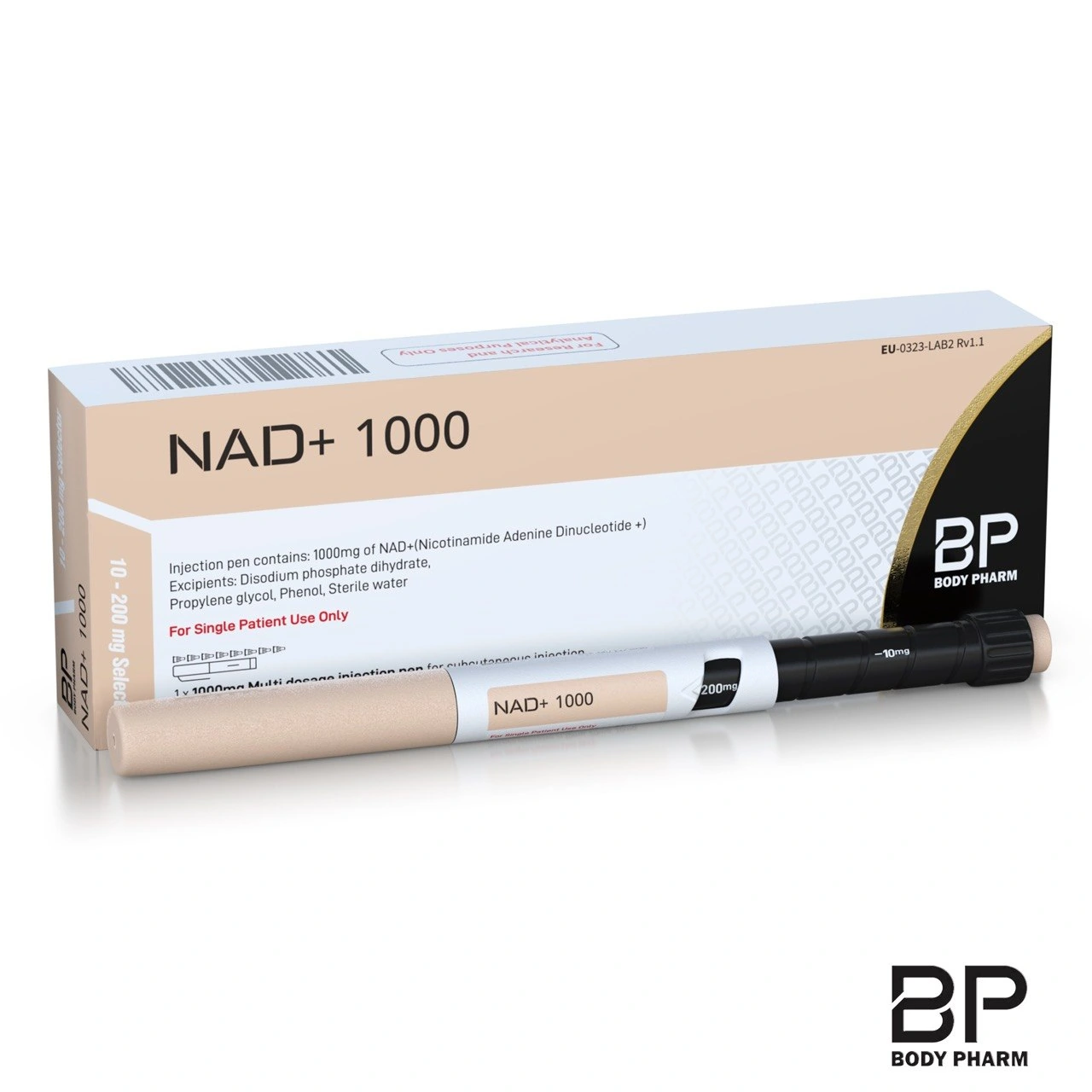
NAD+ and glutathione are different molecules. NAD+ is a coenzyme involved in cellular reactions; glutathione is a small peptide involved in antioxidant and redox processes. Seeing both on an IV menu in Bali does not make them substitutes. A useful comparison also has to identify the route, the measured outcome and the exact service or product being offered.
That matters when you are comparing a NAD+ pen with a clinic appointment in Canggu or Seminyak. One listing describes a product; another may include an assessment, administration and monitoring. Neither the shared “wellness” category nor a similar sounding benefit establishes equivalent exposure or results.
Start with the molecule, then the question
“Which is better?” is incomplete until there is an outcome to compare. A blood measurement, a reported symptom and a long-term clinical outcome answer different questions.
| Comparison point | NAD+ | Glutathione |
|---|---|---|
| What the name identifies | Nicotinamide adenine dinucleotide, a coenzyme | A tripeptide with antioxidant and redox roles |
| Common source of confusion | Treating IV, oral and pen routes as equivalent | Applying oral research directly to an IV offering |
| What a meaningful comparison needs | Exact formulation, route and relevant study outcome | Exact formulation, route and relevant study outcome |
| What a menu alone establishes | That a provider lists an offering | That a provider lists an offering |
Neither column establishes that a product is appropriate for a particular person. It gives you the right questions for the practitioner responsible for the service.
What the studies actually measured
A small 2019 human IV NAD+ study followed changes in NAD-related metabolites during and after an infusion. That is useful for understanding what investigators measured after IV administration. It does not establish that a retail pen produces the same exposure, or that either route reliably improves someone's everyday energy.
A randomized oral glutathione trial followed 54 healthy adults for six months and measured glutathione levels and related laboratory markers. Its route was oral. It was not a trial comparing a glutathione IV with a NAD+ pen, and its findings should not be presented as proof of that comparison.
These distinctions are practical. If an offering is described as “supported by research,” ask whether the research studied that molecule by that route, and whether the advertised outcome was measured. A relevant paper can support a narrow statement while leaving a broader promise unanswered.
A pen and an IV appointment are different decisions
The Peptides in Bali NAD+ product page identifies the pen offered in this catalog. An IV service has a different set of questions: who assesses the client, who administers it, what monitoring occurs and who handles a problem afterwards.
For a Bali visitor moving between a villa in Berawa and a later stay in Uluwatu, continuity matters. A service described as convenient is still incomplete until you know how follow-up works when your accommodation changes. Ask the provider for its actual arrangements; do not assume that a location mentioned on a website means it operates there.
For the pen, use the NAD+ format guide to distinguish the product's stated contents from claims made about other routes. The total quantity printed on a pen is not a comparative clinical result.
Does offering both prove they work better together?
No. An IV menu can place different compounds next to each other for operational or commercial reasons. It does not establish a tested combination, a superior outcome or compatibility within one formulation.
Ask a concrete follow-up: “Which human study examined the combination and outcome you are describing?” Separate studies of two ingredients cannot answer that on their own. Equally, a biological explanation is a reason to investigate a question, not confirmation of a benefit in customers.
This is particularly useful when one page discusses antioxidant activity and another uses broad language about energy or recovery. Those phrases may refer to different measurements and may not be comparable at all.
Make a comparison you can actually use
Write down the exact offering, route, claimed outcome and evidence supporting that outcome. Keep practitioner services separate from the product contents. If a provider cannot explain the connection between its offering and the cited study, the comparison remains unresolved.
The full pen catalog is useful for identifying which products Peptides in Bali actually lists. It should not be treated as a clinic menu or as evidence that every product in the same category serves the same purpose.
Frequently asked questions
Is NAD+ another name for glutathione?
No. They are chemically different molecules. Shared use in wellness marketing does not change their identity.
Does an oral glutathione study prove an IV glutathione claim?
No. Route, formulation, participant group and measured outcome must be considered before applying a finding to another offering.
Can I compare a NAD+ pen with an IV menu by the stated quantity alone?
No. Quantity alone does not account for administration, exposure, formulation or clinical assessment. First establish exactly what each offering includes.
Sources and further reading
- NAD+ metabolome during six-hour IV infusion — Grant et al., Frontiers in Aging Neuroscience. Source checked 2026-10-19.
- Oral glutathione supplementation and body stores — Richie et al., European Journal of Nutrition. Source checked 2026-10-19.