
Two products can sit under a longevity heading while containing different molecules in different formats. A Bali buyer comparing NAD+ with taurine should begin with those identities. The shop's NAD+ pen is not a taurine supplement, and a paper about a blood marker is not automatically a product trial.
Match the name to the format
NAD+ is a coenzyme involved in cellular metabolism. Taurine is a conditionally essential amino acid. These descriptions explain why both are studied; they do not establish that one replaces the other or that a shared “energy” label makes their effects comparable.
The NAD+ listing identifies the actual catalogue format. Read its labelled amount as package information. Do not compare a large number on one package with a smaller number on another as though milligrams were a universal scale of benefit across molecules.
| Item being compared | Keep this information | Do not infer |
|---|---|---|
| NAD+ pen | Exact product and route | Equivalence with an infusion |
| Taurine supplement | Ingredient and finished preparation | A personal age-reversal effect |
| Taurine blood result | Test context and interpretation | A shopping requirement |
Know what the NAD+ paper asked
The IV NAD+ pilot examined metabolite changes during an infusion. It did not compare the shop's pen with taurine or measure human lifespan. A real physiological measurement remains interesting when it is described accurately.
If a product description cites the pilot, keep the intravenous route in your research note. Ask what connects that preparation to the product being offered rather than silently deleting the route from the claim. A molecule's name alone does not answer a formulation question.
Know what the taurine papers asked
The NIH account of longitudinal research questioned whether circulating taurine consistently falls with age. The human study cited here also examined relationships with aging and physical characteristics. Those are biomarker questions: can the measurement tell us something reliable about a process?
An intervention question comes afterwards. It asks what happens if a defined preparation is given and a relevant outcome is measured. Observing a level, identifying a correlation and changing a health outcome are separate steps. None should be supplied by the word “longevity” alone.
FAQ: Use a four-field comparison note
Write the molecule, the actual product, the study route and the measured outcome. If one field is missing, keep it as an unanswered question. That is more useful than filling the space with a marketing phrase or a prediction based on package size.
For a Bali stay, add only the practical information relevant to an order, such as the selected product and the details you need the manager to confirm. Keep medical concerns with the appropriate clinician. A shopping enquiry does not require inventing a treatment goal from a biomarker result.
The shop supplies the current catalogue comparison. It does not establish that a retail format reproduces a pilot infusion or that taurine research selects a suitable product for an individual.
Is a taurine test needed to choose an NAD+ pen?
The cited sources do not establish that decision rule. A test should have a clinical reason and interpretation, not serve as an automatic trigger for an unrelated purchase.
Can an energy claim stand in for a measured outcome?
It is too broad on its own. Ask whether the source measured a metabolite, a performance task, symptoms or another outcome, and retain that wording.
Does this comparison recommend combining them?
No. The papers discussed here do not establish a combination plan or a personal treatment recommendation.
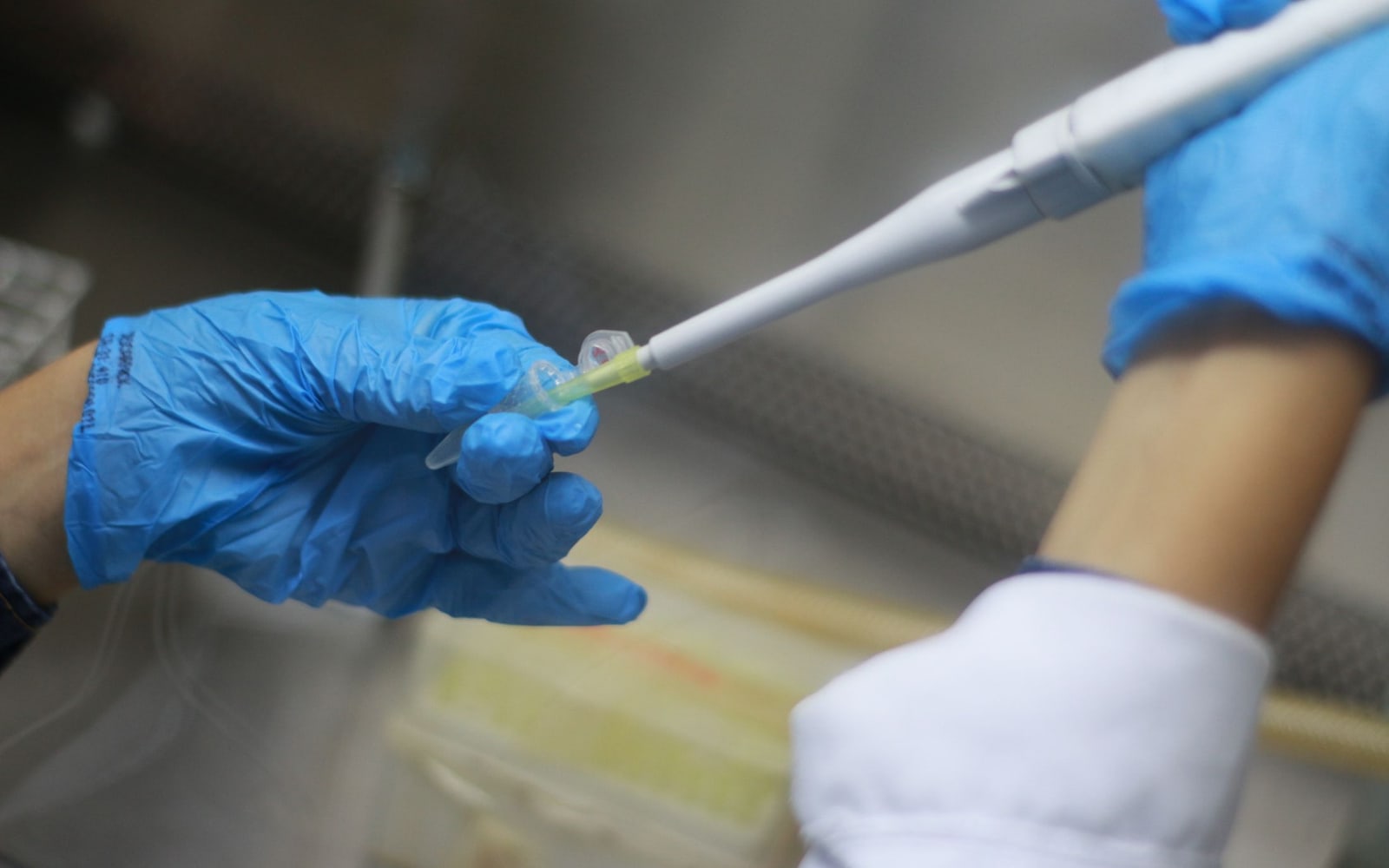
Photograph: Leiliane Dutra · Pexels. Laboratory work, illustrating the distinction between a measurement and a treatment outcome. Illustrative stock photograph; it does not show the study preparation or its results.
Sources and further reading
- A Pilot Study Investigating Changes in the Human Plasma and Urine NAD+ Metabolome During a 6 Hour Intravenous Infusion of NAD+ — Grant et al., Frontiers in Aging Neuroscience. Source checked 2026-10-25.
- Experimental Evidence Against Taurine Deficiency as a Driver of Aging in Humans — Aging Cell. Source checked 2026-10-25.
- NIH researchers conclude that taurine is unlikely to be a good aging biomarker — National Institutes of Health. Source checked 2026-10-25.