
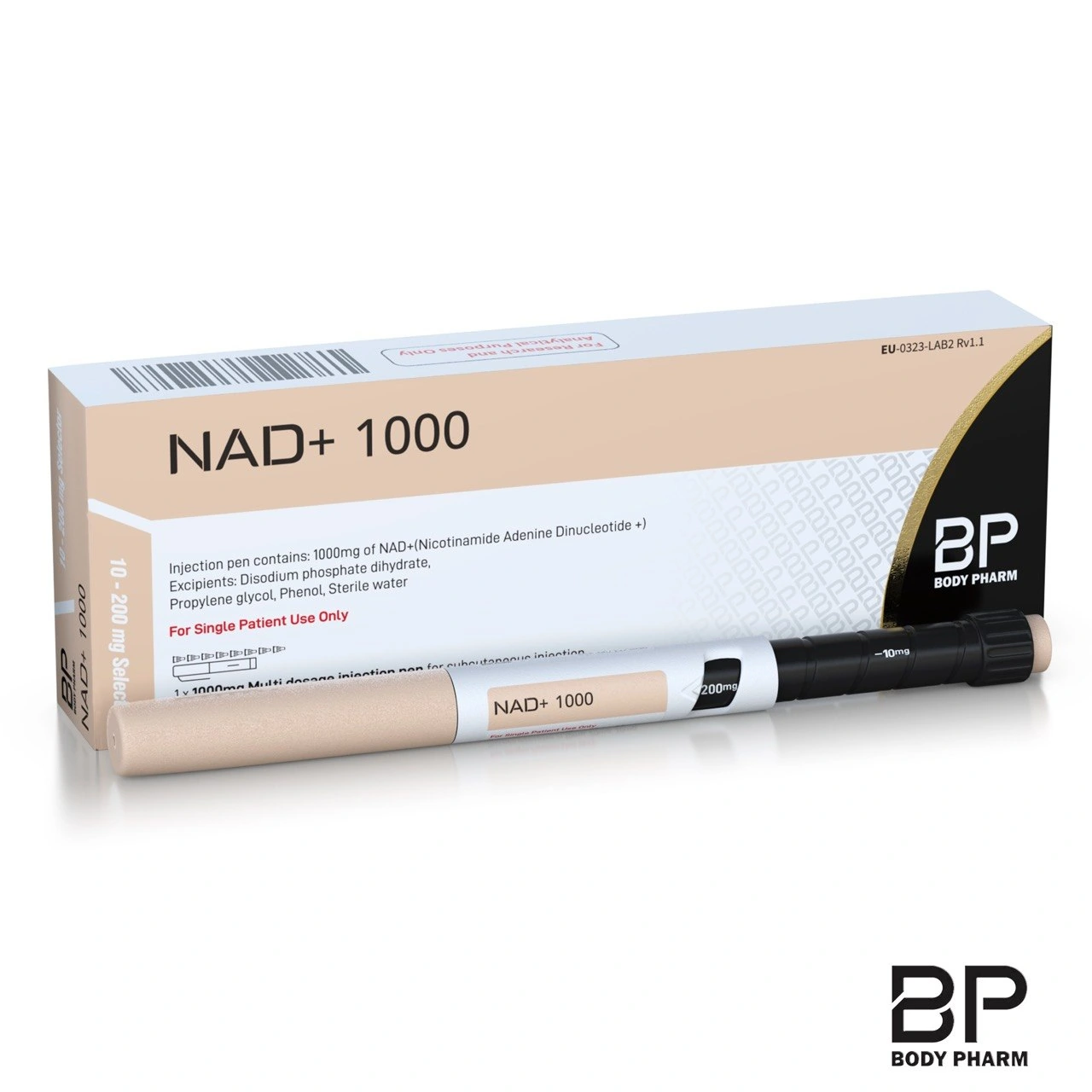
An NAD+ blood result does not automatically tell a Bali buyer to choose an NAD+ pen. Before interpreting the number, identify the sample, the laboratory method and the question the test was intended to answer. Those details can change the meaning of the result.
Peptides in Bali's NAD+ listing identifies a product format. It is not a diagnostic service or a threshold-based recommendation generated from a blood test.
First identify what the laboratory actually measured
“NAD test” can describe different analytical approaches and biological samples. A result from whole blood is not automatically equivalent to a plasma, serum or tissue measurement.
A paper on monitoring the NAD metabolome explains the importance of the measured compounds and analytical context. The NADmed blood-assay instructions, for example, specify whole-blood use and handling requirements. Those instructions should not be generalized to an unrelated assay.
| Field on the report | Why it matters | Question if it is missing |
|---|---|---|
| Sample type | Identifies the biological material measured | Was this whole blood, plasma or something else? |
| Analyte | Distinguishes NAD+ from other related measurements | What exactly does the number represent? |
| Units and method | Makes the result interpretable | Which assay and unit were used? |
| Reference information | Shows the comparison supplied by that laboratory | How was this interval established? |
| Collection and handling details | Helps assess whether the sample met requirements | Were the method's conditions followed? |
A screenshot containing only a number and a coloured bar leaves most of this unanswered.
Reference intervals are not automatically treatment thresholds
A laboratory may compare your result with a reference population. That is different from demonstrating that people below a particular number benefit from a specific intervention.
To make the second claim, evidence would need to connect the threshold, the treatment and a meaningful outcome. An assay's ability to measure a substance accurately does not establish that clinical decision rule.
The distinction is similar to a measuring instrument and a treatment study having different jobs. One asks whether the measurement is reliable. The other asks whether acting on it improves something that matters to the patient.
Be cautious with a universal age-decline story
A 2026 whole-blood NAD+ study reported findings that do not support a simple universal decline in that measurement with age. This does not mean every tissue or disease context is identical. It means that a broad claim about aging should not be treated as a guaranteed interpretation of one blood test.
A result also should not be converted into a biological-age score without evidence for that conversion. The language of optimization can make a numerical target sound established even when the clinical decision threshold has not been demonstrated.
If an interpretation is offered, ask what study supports the conclusion for the same sample, method and population.
A changed number is not the same as a changed symptom
Someone may repeat a test after changing a product or routine. A different result does not automatically establish that the intervention caused it, and a numerical change is not necessarily the same as improved energy or function.
The comparison needs consistent measurement conditions and an appropriate interpretation. It also needs a clearly defined outcome beyond the number if the original goal was to address a symptom.
This article does not set a target NAD value, recommend a testing interval or provide a pen regimen. Those would be additional claims requiring clinical evidence and an individual assessment.
Make a Bali consultation more useful
If the test was obtained during a wellness check in Bali, request the complete report. Bring earlier results and the names of any products used between measurements. A clinician needs the actual health question, not only a request to increase the number.
For persistent fatigue or another symptom, describe its pattern and any previous assessment. A biochemical result should not displace investigation of the problem that prompted the test.
For the separate product enquiry, the NAD+ format guide explains how the catalogue pen differs from other NAD-related terminology. The product page supplies the current listing information.
FAQ
Does a low NAD+ result prove I need a pen?
No. The result needs method-specific and clinical interpretation. It does not by itself establish a diagnosis, a treatment threshold or the suitability of the listed product.
Can I compare results from different laboratories directly?
Only after checking the sample type, analyte, method, units and reference information. Similar test names do not establish equivalent measurements.
Does a whole-blood result show NAD+ levels in every tissue?
No. A measurement from one biological compartment should not be treated as a direct measurement of every other compartment.
What should I ask before relying on a treatment recommendation?
Ask what evidence links the exact test result to the proposed intervention and a meaningful clinical outcome. Measurement precision alone does not answer that question.
Sources and further reading
- A Method to Monitor the NAD+ Metabolome—From Mechanistic to Clinical Applications — Analytical research indexed in PubMed Central. Source checked 2026-10-20.
- Human whole-blood NAD+ levels do not vary with age or lifestyle interventions — Tretowicz et al., Nature Metabolism. Source checked 2026-10-20.
- NADmed blood assay instructions for use, version 5 — NADmed. Source checked 2026-10-20.