
MOTS-C and creatine are not interchangeable products for a training goal. If you are comparing them while living or training in Bali, the most useful difference is the evidence: which studies actually administered the substance to people and measured the outcome you care about?
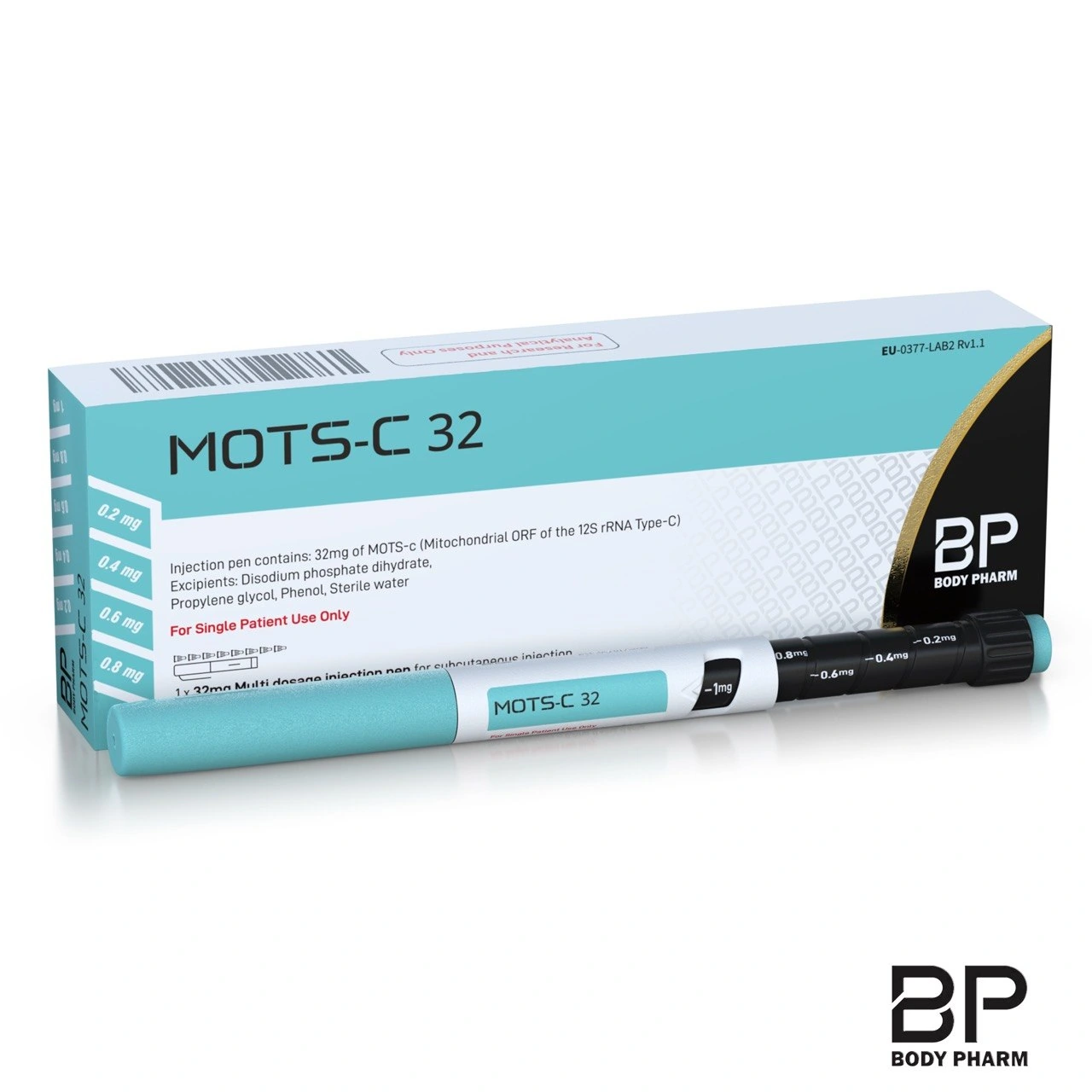
Peptides in Bali's MOTS-C listing describes the catalogue pen. Creatine is a comparator in this article, not another product format offered under the MOTS-C name.
Start with the kind of evidence, not the word energy
Both substances can appear in articles about exercise and cellular energy. That broad connection does not mean they do the same thing or have been tested in the same way.
A creatine resistance-training trial randomized 19 trained men and followed a 12-week training programme. It measured performance and muscle-related outcomes after administering creatine or placebo.
A MOTS-C exercise paper included observations of the body's own MOTS-C in people after exercise and experimental peptide administration in mice. Those components should not be merged into a human trial of a commercial pen.
| Comparison question | Creatine study cited here | MOTS-C study cited here |
|---|---|---|
| What happened in the human part? | Participants received creatine or placebo during training | Endogenous MOTS-C was observed around exercise |
| Was the substance administered in the cited experimental work? | Yes, to human participants | Experimental peptide administration was a separate preclinical component |
| What can be compared directly? | Outcomes within the creatine trial | Outcomes within the MOTS-C experiments |
| What cannot be inferred? | A personal guarantee or validation of another product | That a listed pen reproduces exercise outcomes in people |
The table compares study designs. It is not a declaration that every creatine product is appropriate or that the full MOTS-C literature has been reduced to one paper.
A training outcome needs an actual training measure
Strength, repeated-effort performance, fatigue and body composition are different outcomes. An article that says a substance “supports energy” should identify which one was measured.
A molecular pathway may explain why researchers are interested, but it does not replace a performance test. The foundational MOTS-C paper investigated metabolic mechanisms in experimental systems. That work should be described at that level rather than rewritten as a personal training result.
For a useful comparison, select the endpoint first. If your concern is whether performance has changed, a general wellness score or an isolated molecular marker is not necessarily the same answer.
Does one replace the other?
The cited studies do not establish a substitution rule. A substance being discussed in muscle research is not enough to show it can replace another intervention with a different evidence base.
The same caution applies to the phrase exercise mimetic. It describes a research idea, not a demonstration that a pen replaces the many effects of training. Our MOTS-C exercise-mimetic guide explains that terminology.
A comparison is most useful when it narrows the question, rather than turning two broadly related names into a forced either-or decision.
Separate studies do not validate a stack
Reading one paper about creatine and another about MOTS-C cannot show what happens when the two are used together. The cited research does not test that combination.
A claim about synergy, cancellation or an optimal schedule would require evidence addressing the combined exposure. A diagram showing different pathways is not enough to determine the net clinical effect.
This article does not provide a combined regimen, timing advice or monitoring schedule. It also does not interpret the absence of a listed interaction as proof that a combination has been studied.
Make the comparison relevant to training in Bali
If a Canggu training block has become harder than expected, describe the actual change: which activity, under which conditions and over what period? Keep a record that a qualified professional can interpret rather than diagnosing a mitochondrial problem from a difficult session.
Bring a complete list of supplements and medicines when seeking advice. A peptide enquiry should not obscure other products already being used or a symptom that requires assessment.
For product identity, return to the MOTS-C information. For clinical suitability or a performance concern, the appropriate discussion needs your own context and the actual outcome you hope to change.
FAQ
Is MOTS-C a stronger form of creatine?
No. They are different substances. A stronger-or-weaker ranking hides differences in mechanism, formulation and evidence.
Does the cited human MOTS-C exercise research test the pen?
No. Measuring endogenous MOTS-C after exercise is a different experiment from administering a commercial pen to people.
Does the creatine trial prove every user will obtain the same result?
No. It reports findings in its participants and training setting. Individual suitability and other products require separate consideration.
Do the cited studies establish a combined protocol?
No. Separate evidence streams do not establish the effects, compatibility or timing of a combined intervention.
Sources and further reading
- MOTS-c is an exercise-induced mitochondrial-encoded regulator of age-dependent physical decline and muscle homeostasis — Reynolds et al., Nature Communications. Source checked 2026-10-20.
- Performance and muscle fiber adaptations to creatine supplementation and heavy resistance training — Volek et al., Medicine & Science in Sports & Exercise. Source checked 2026-10-20.
- The mitochondrial-derived peptide MOTS-c promotes metabolic homeostasis and reduces obesity and insulin resistance — Lee et al., Cell Metabolism. Source checked 2026-10-20.