
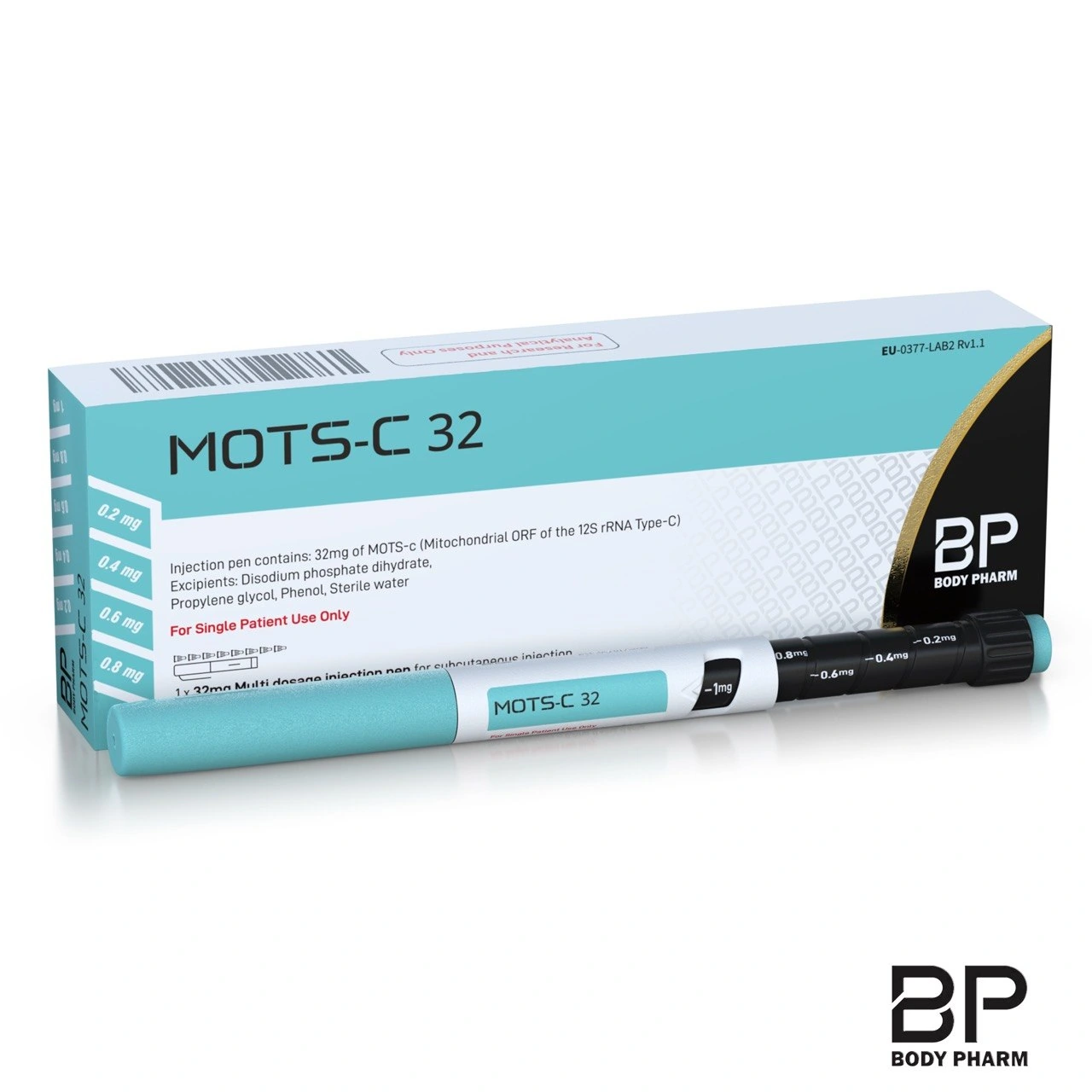
Choosing between a pen and an oral supplement is not merely choosing a convenient package. MOTS-C and berberine are different molecules with different evidence. If you are looking at MOTS-C in Bali, compare the clinical question and exact preparation before treating the formats as alternatives.
Peptides in Bali lists the MOTS-C pen. Berberine is discussed here to explain a common metabolic comparison. Its appearance in this article does not mean it is available from the shop or interchangeable with the listed peptide.
Identity comes before convenience
MOTS-C belongs to mitochondrial-derived peptide research. Berberine is an alkaloid associated with plant sources and oral preparations. Similar language about metabolism does not erase that chemical difference.
| Question | What to establish |
|---|---|
| What molecule is it? | Full ingredient name, not a wellness category |
| What product is it? | Exact preparation and route |
| What outcome is claimed? | Glucose, fat, performance or another defined measure |
| What supports the claim? | A relevant study with the matching intervention |
| Is there a comparison? | Whether both interventions were tested together |
A convenient format may be important to a shopper, but convenience cannot answer the evidence question. Resolve the identity first, then consider the practical details relevant to the actual item.
MOTS-C observations are not all intervention trials
The MOTS-C exercise publication includes observations of endogenous peptide levels and experimental investigations. A molecule measured in the body after exercise is not the same thing as a tested benefit from administering a pen.
When reading a summary, underline the intervention. Was the study measuring something naturally present, or did it administer a preparation? Then identify the outcome. This small step prevents several unsupported assumptions from being packed into one word such as “energy.”
Research can explain why a molecule is interesting without settling which product or personal use is appropriate. Keeping those questions separate makes the comparison more useful, rather than less.
Read berberine results by endpoint
An earlier randomized study involved a small metabolic-syndrome population. The newer obesity and MASLD trial did not demonstrate improvement in its primary visceral-fat and liver-fat outcomes versus placebo. The populations and questions were not identical.
The sensible reading is endpoint-specific. Do not generalise one favourable marker into a claim about every form of fat loss, and do not turn one null endpoint into a statement about every possible effect. Ask whether the source addresses the outcome being advertised.
These sources also do not rank berberine against the MOTS-C pen. A comparison requires the relevant interventions and methods; placing separate paper summaries side by side does not create a head-to-head trial.
Make the goal concrete in Bali
Before a consultation, write down what prompted the search. A laboratory concern, persistent tiredness and a wish to change appearance are different starting points. They should not automatically lead to the same product conversation.
Bring current medicines and supplements, especially if several products are described as supporting metabolism. A professional can assess the combined context. This article provides no instruction to add, replace or combine them.
For a short stay in Bali, ask how follow-up would be handled after departure. Confirm the actual provider and service rather than assuming a term found online refers to an available local treatment. A location in a search phrase does not settle availability or suitability.
What the product page can answer
The shop can help identify listed compounds and formats. Ask for the exact label and the documents available for the item you are considering. Do not translate a study amount into a pen setting or infer a course length from total quantity alone.
A clear enquiry names the listing and the uncertain detail. A clear clinical question names the concern and relevant history. Keeping those two questions distinct makes it easier to get an answer that is actually useful.
Keep the original study link with your notes so a clinician can review the exact preparation and outcome rather than a shortened headline.
FAQ
Is berberine a peptide?
No. In this comparison it is an alkaloid, while MOTS-C is a peptide. They are not the same ingredient in different packaging.
Can I compare them by the word “metabolism” alone?
No. Specify the outcome and match the evidence to the preparation and population.
Does this article support using both together?
No. The cited studies do not establish a combined regimen or an equivalent dose between these products.
Sources and further reading
- MOTS-c is an exercise-induced mitochondrial-encoded regulator of age-dependent physical decline and muscle homeostasis — Reynolds et al., Nature Communications. Source checked 2026-10-23.
- Effect of berberine administration on metabolic syndrome, insulin sensitivity, and insulin secretion — Perez-Rubio et al., Metabolic Syndrome and Related Disorders. Source checked 2026-10-23.
- Berberine and Adiposity in Diabetes-Free Individuals With Obesity and MASLD: A Randomized Clinical Trial — JAMA Network Open. Source checked 2026-10-23.