
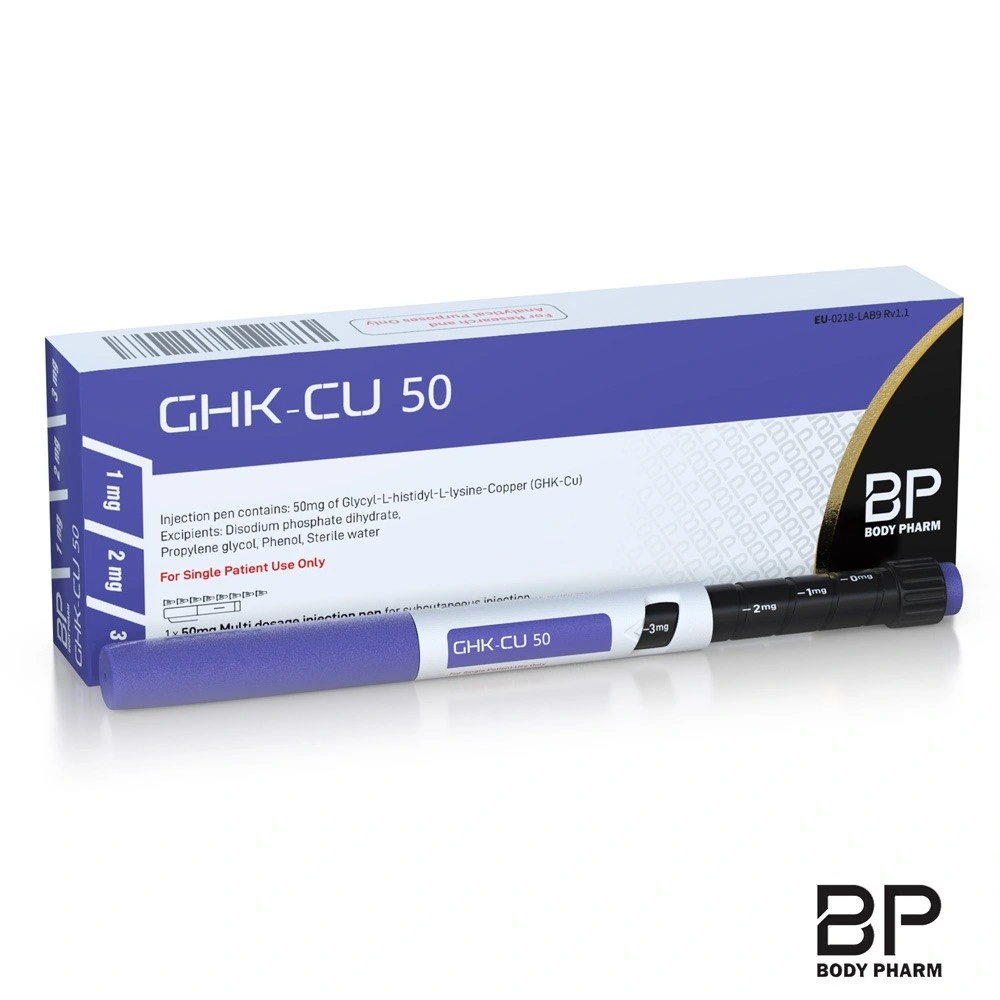
GHK-Cu and Minoxidil do not have equivalent evidence for hair regrowth. Minoxidil has randomized clinical studies involving people with androgenetic alopecia. A frequently cited copper-peptide hair experiment used AHK-Cu—not GHK-Cu—in cultured follicles and cells.
For a Bali reader comparing a peptide pen with a scalp product, the meaningful question is whether the exact ingredient and route have been tested for the specific hair concern.
Start with the kind of evidence
A hair follicle kept in culture can help researchers investigate a mechanism. It is not the same as following a person with a diagnosed pattern of hair loss over time.
| Evidence | What it can tell you | Important boundary |
|---|---|---|
| A randomized patient trial | Outcomes under the study's conditions | Does not guarantee every person's result |
| A cultured-follicle experiment | A response in the tested tissue | Does not establish treatment success on a person's scalp |
| A before-and-after photograph | An observed appearance change | Cannot isolate treatment from other changes |
| A multi-ingredient routine | What happened during the routine | Cannot readily identify which ingredient mattered |
Knowing the evidence type is more useful than counting how many references appear at the bottom of a page.
What the Minoxidil study measured
A randomized 48-week study enrolled 393 men with androgenetic alopecia and compared topical Minoxidil preparations with placebo. It measured hair-count and scalp-coverage outcomes, rather than only a laboratory pathway. Read the original trial.
The population still matters. A study of androgenetic alopecia is not automatically evidence for every cause of shedding, and the topical preparation is not interchangeable with every other route.
This article discusses Minoxidil as a comparator; it does not claim that Peptides in Bali stocks it or prescribe a treatment routine.
The AHK-Cu naming problem
The 2007 follicle paper investigated AHK-Cu in cultured human hair follicles and dermal papilla cells. Its findings should remain attached to AHK-Cu and that experimental setting. Read the paper.
Changing one letter in the name changes the compound. A headline that calls this a GHK-Cu patient trial has changed both the ingredient and the type of evidence.
GHK-Cu has separate research, including a study of collagen synthesis in fibroblast cultures. That supports a different scientific observation, not a clinical demonstration that a GHK-Cu pen regrows hair. Read the GHK-Cu study.
Why route and formulation matter
The Peptides in Bali GHK-Cu product is a pen format. It is not a finished topical Minoxidil medicine or a cosmetic scalp serum.
Do not turn a discussion of a topical routine into instructions for mixing or applying a pen's contents. The compatibility, formulation and intended use would need separate evidence. A shared interest in hair biology does not establish that two preparations belong together.
The existing GHK-Cu format guide explains the distinction between pen amounts and serum descriptions. This comparison adds the clinical-evidence question behind a proposed alternative.
Make a hair consultation more useful in Bali
If you are noticing thinning while staying in Canggu, take a clear history to a qualified clinician: when it began, whether the pattern changed, current treatments and what happened before the change. A product preference should not replace identifying the concern.
If you already use a prescribed or professionally recommended treatment, explain that before adding another product. Ask what evidence supports the proposed addition, which outcome would be followed and how the clinician would interpret a change.
Consistent photographs can help describe an appearance over time, but keep the lighting, angle and hair presentation comparable. They support a conversation; they do not prove which product caused a result.
Be precise about a combination claim
Two plausible mechanisms do not establish clinical synergy. If a recommendation combines several ingredients, ask whether the evidence isolates the added contribution of GHK-Cu or simply observes a multi-part routine.
The product guide can help identify the exact catalogue item. It cannot determine the cause of hair loss or select a medically appropriate treatment.
Frequently asked questions
Is GHK-Cu proven better than Minoxidil?
The evidence described here does not support that claim.
Was the human follicle study a human treatment trial?
No. Human tissue studied outside the body is not the same as treating and following patients.
Can I replace a scalp product with a pen?
That is not an equivalence established by the shared hair-related marketing. Discuss the exact intervention with a qualified clinician.
Does a visible improvement prove the combination worked?
It is an observation worth discussing, but other treatments and changes may contribute. A photograph alone cannot isolate the cause.
Sources and further reading
- Randomized 5% minoxidil, 2% and placebo trial — Olsen et al., JAAD. Source checked 2026-10-19.
- Tripeptide-copper complex and hair growth in vitro — Pyo et al., Archives of Pharmacal Research. Source checked 2026-10-19.
- GHK-Cu and collagen synthesis in fibroblasts — Maquart et al., FEBS Letters. Source checked 2026-10-19.