
For pigmentation questions in Bali, GHK-Cu and azelaic acid should be compared by the skin concern and the formulation being considered. They are different ingredients with different research contexts. A topical melasma study and a copper-peptide pen listing do not answer the same question simply because both mention skin.
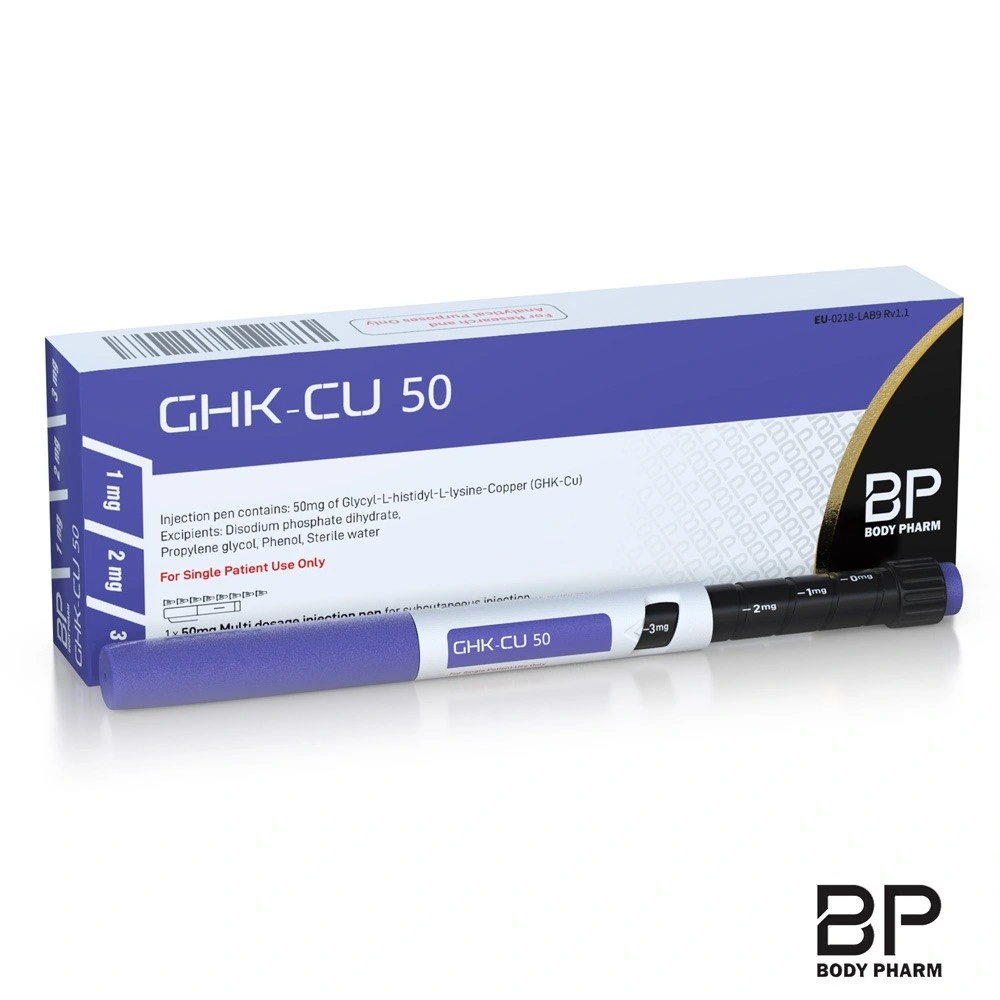
Our GHK-Cu page shows the catalogue presentation. This guide helps you understand how that format differs from the topical ingredients often discussed beside it, so that a product enquiry begins with the right name and expectation.
Uneven tone is a description, not a diagnosis
Two people can describe uneven skin tone while referring to different patterns or causes. One may have a diagnosed pigmentation condition; another may be noticing marks after an earlier skin problem or a change after a procedure. The wording alone is not enough to select an intervention.
Before comparing ingredients, describe what changed, when it appeared and whether a clinician has assessed it. This turns an open-ended search for the strongest ingredient into a question that can be answered with relevant evidence. It also avoids treating every skin-quality claim as a pigmentation claim.
Where azelaic acid evidence fits
The cited azelaic-acid trial compared topical treatment in melasma. Its value lies in addressing a defined condition with a specified preparation. It is not a study of GHK-Cu, and it cannot establish that any unrelated product with skin-related marketing is equivalent.
When reading a comparison, keep the diagnosis and route beside the result. If either changes, the applicability of the evidence needs to be reconsidered. This is a basic distinction, but it is easily lost when several ingredients are grouped under one broad beauty heading.
Where copper-peptide evidence fits
A topical copper-tripeptide study investigated skin after CO2 laser resurfacing. That is a different clinical setting from the melasma comparison. It is useful to know that copper peptides have been studied in specific skin contexts; it is equally useful to retain the details of those contexts.
Neither of these papers is a direct comparison between azelaic acid and the pen listed in this catalogue. A shared reference to skin does not make the interventions interchangeable. The ingredient, route, formulation and outcome all belong in an accurate explanation.
| What to compare | Helpful detail | Avoid assuming |
|---|---|---|
| Concern | Pigmentation, texture or a post-procedure question | Every skin concern has one cause |
| Product | Exact ingredient and presentation | A serum and pen are equivalent |
| Study | Population and measured outcome | Any positive skin result transfers |
| Next step | A specific product or clinical question | A universal winner exists |
A sensible Bali routine discussion
Bring the names of your current skincare products and any recent treatments to a dermatology appointment. This is especially useful if you are considering a new product while visiting Bali: the professional needs to understand what is already being used, not just the new ingredient that caught your attention.
Discuss sun exposure and the broader plan for pigmentation rather than expecting one ingredient to answer every part of the problem. Tropical surroundings do not create a special dose or guarantee a particular response. They provide practical context for how a routine is followed and reviewed.
Avoid using a short holiday as a reason to combine several unfamiliar interventions quickly. If a change occurs after multiple new products or procedures, it becomes harder to identify which one mattered. This article does not recommend a combination schedule or an injectable skincare regimen.
Reading the catalogue accurately
Use the shop to identify the actual format and the journal to read other compound comparisons. For the item itself, ask about the current label and supporting documents. For a skin concern, ask whether the evidence matches the condition and route being discussed.
A clear enquiry might distinguish “I want to understand this pen's listed format” from “I want advice about a pigmentation diagnosis.” Both are valid questions, but the first can be answered from product information while the second requires clinical context.
FAQ
Are copper peptides and azelaic acid the same type of ingredient?
No. They are different compounds. Their use in overlapping skincare conversations does not make their evidence identical.
Can a serum study prove results from a GHK-Cu pen?
No. Route and formulation matter. The study must be interpreted as the intervention it actually tested.
Is a higher amount on a label a better comparison?
Not across unlike formats. Quantity does not establish equivalent exposure or a superior clinical outcome.
What should I ask before deciding?
Identify the skin concern, the exact product and whether the cited research addresses both. Those details are more useful than a general claim that one ingredient is stronger.
Sources and further reading
- The treatment of melasma: 20% azelaic acid versus 4% hydroquinone cream — Baliña and Graupe, International Journal of Dermatology. Source checked 2026-10-22.
- Effects of topical copper tripeptide complex on CO2 laser-resurfaced skin — Miller et al., Archives of Facial Plastic Surgery. Source checked 2026-10-22.